Dredging services and equipment rental with operator support
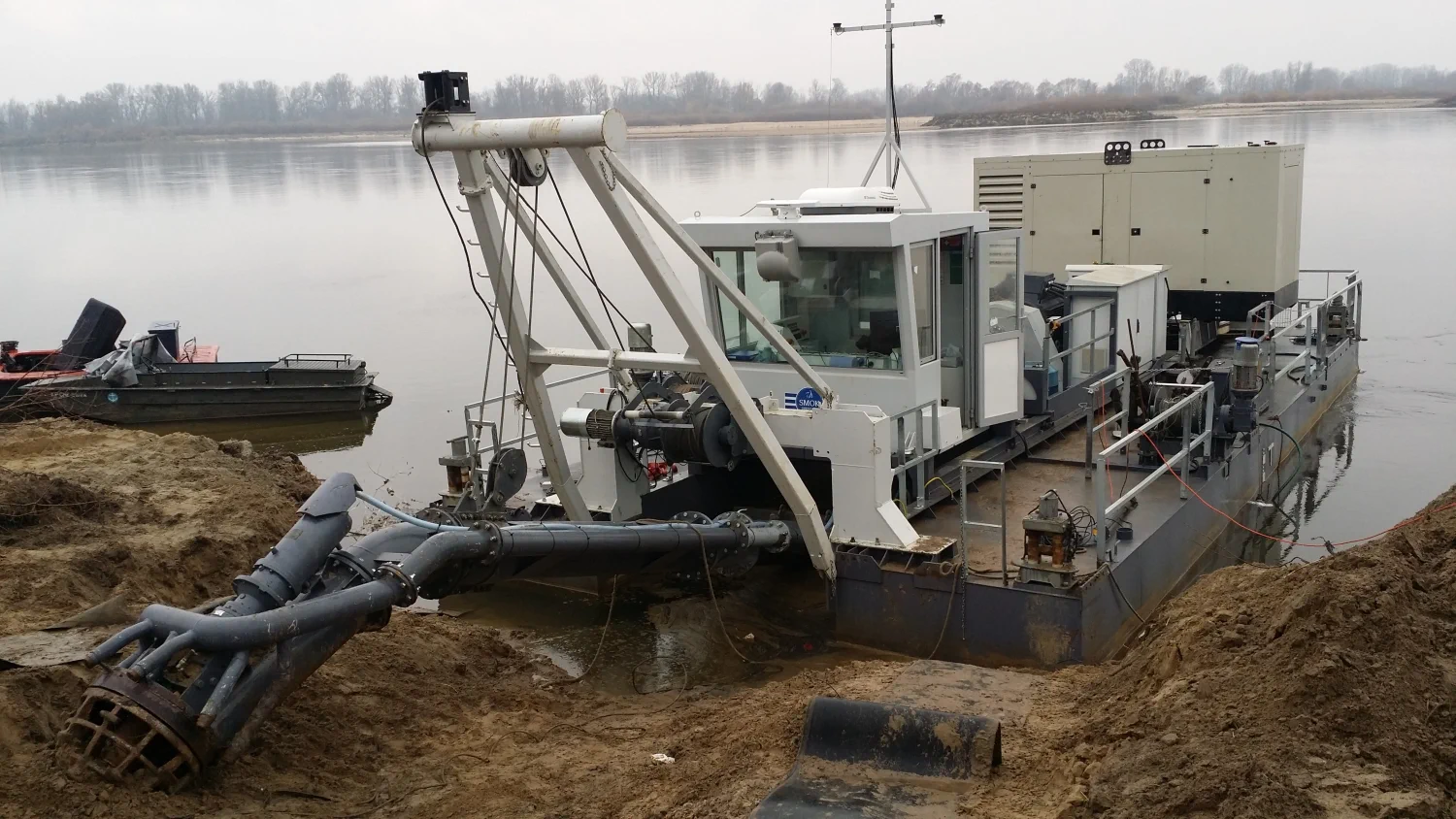
Although our core business is the production of dredgers and dredging equipment, we also offer comprehensive dredging services to meet our customers’ expectations. We are most often chosen for situations where the scope of work is particularly demanding. Thanks to our extensive technical resources – including both dredgers and silting pumps – we can tailor the appropriate equipment to the specific task and terrain conditions, allowing us to successfully complete even the most complex projects.
Olszewski Machines: Challenging Tasks – Effective Solutions.
Providing dredging services not only allows us to support clients in challenging projects but also to continuously test and refine our technological solutions. As an equipment manufacturer, we also offer a rental option with the option of later purchase – in which case, a portion of the rental fee is credited towards the price of the equipment. This flexible solution allows our customers to test the equipment in practice before making a purchase decision.
We invite you to learn more about our service offerings:
1. Extraction of sand and gravel from under the water surface using the refilling method
The primary recipients of this type of service are sand mines. We tailor our equipment to the specific conditions.
Long-term services, ordered in advance, are most often provided using electric dredgers.
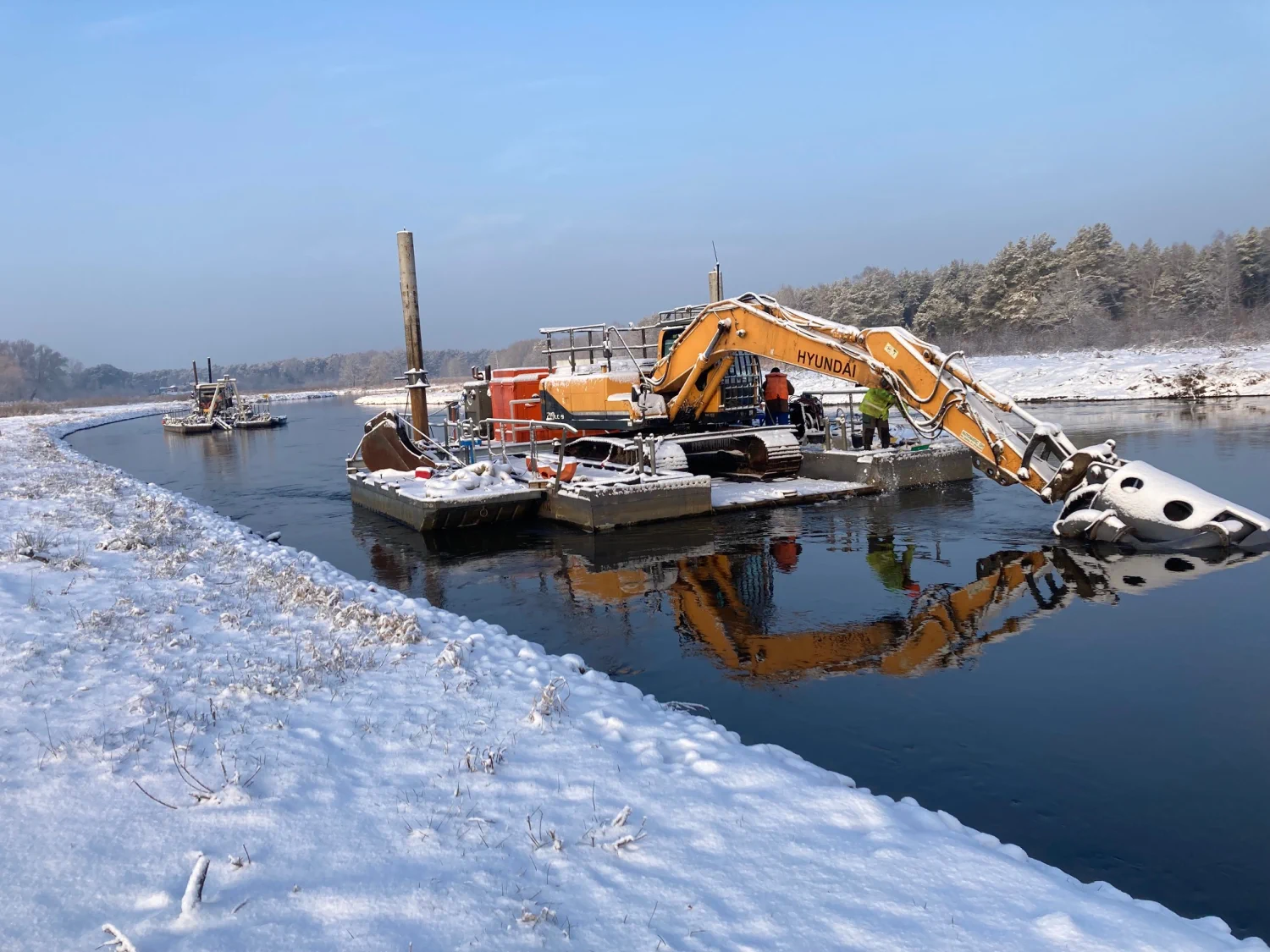
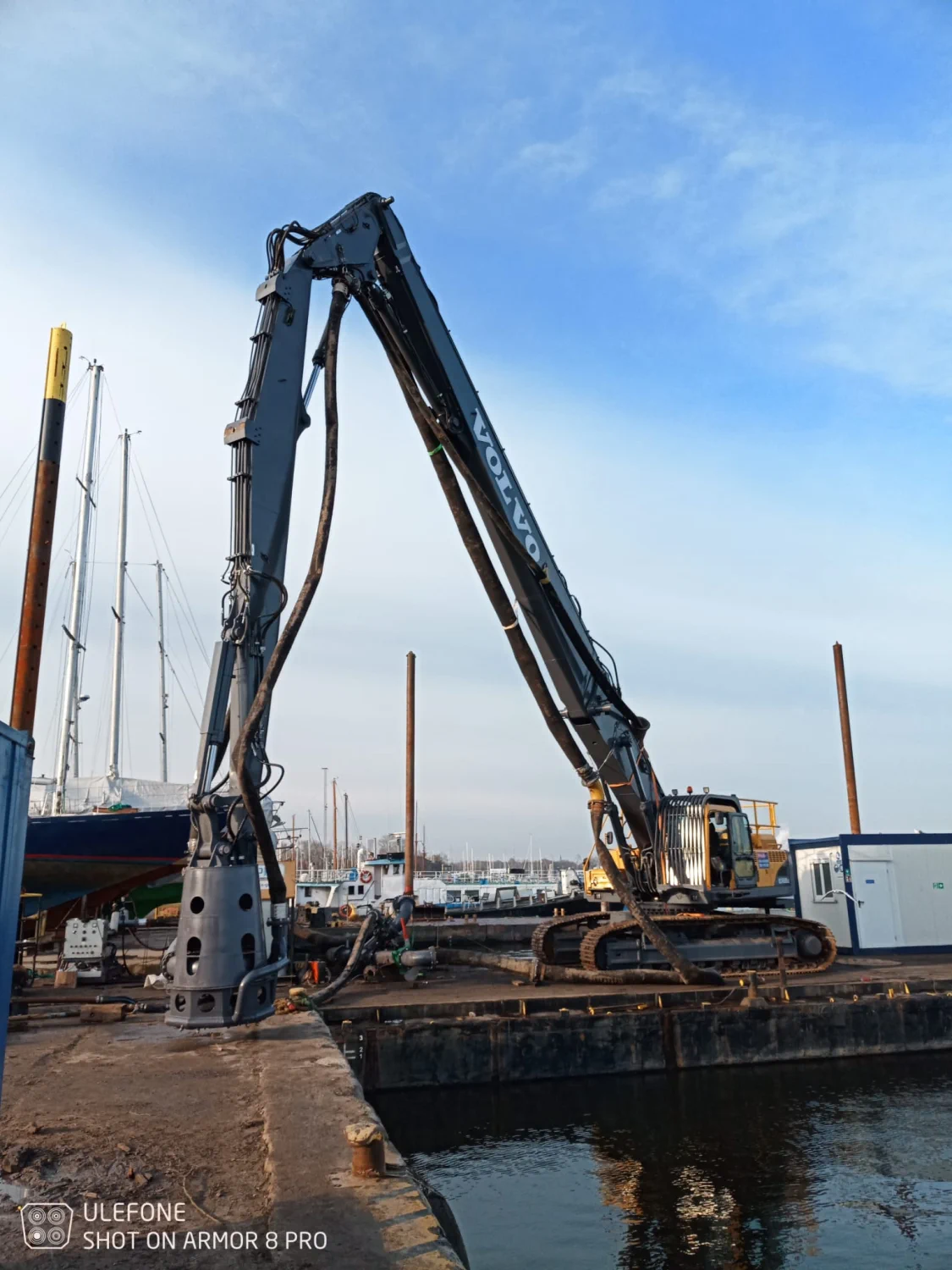
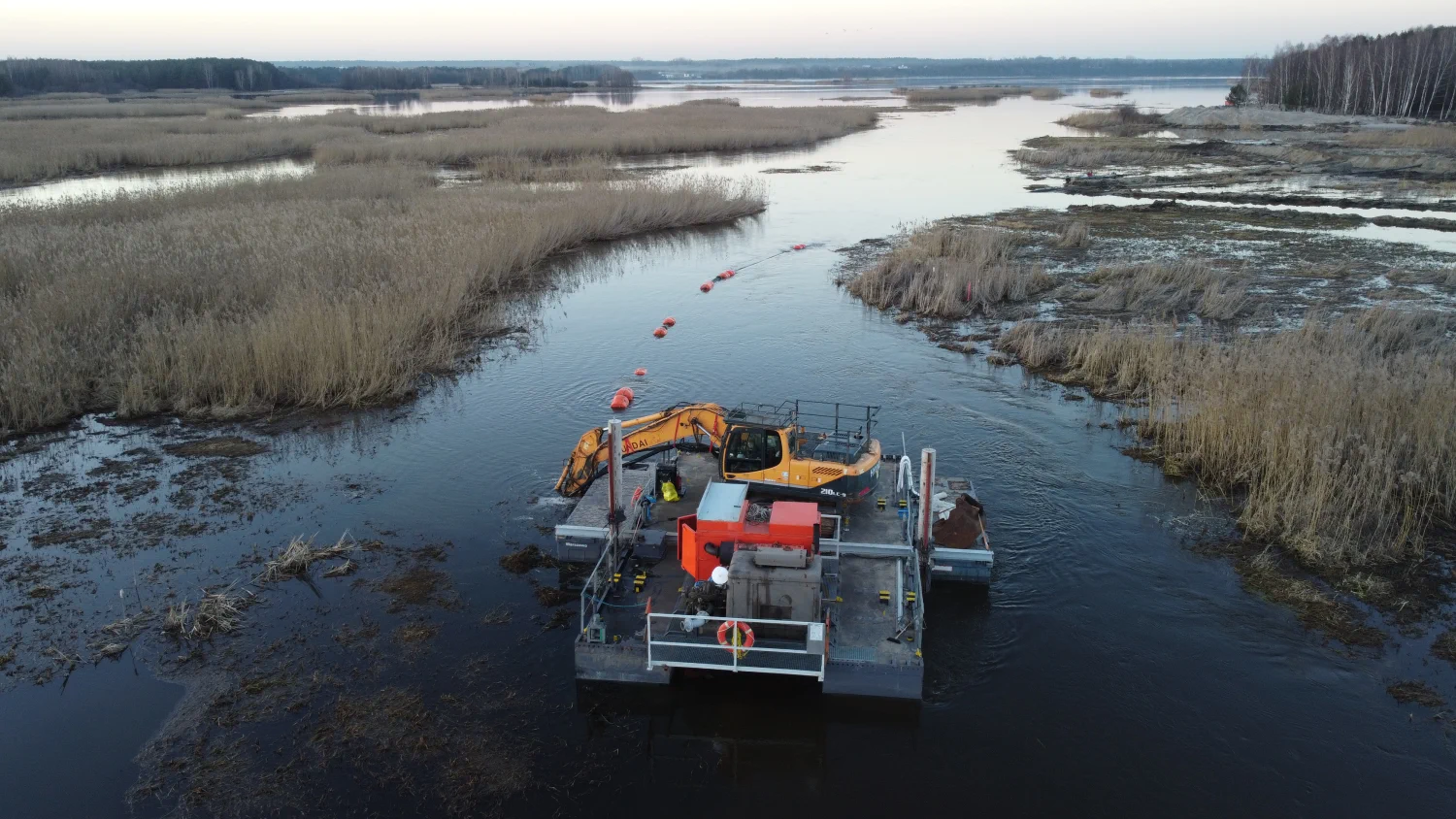
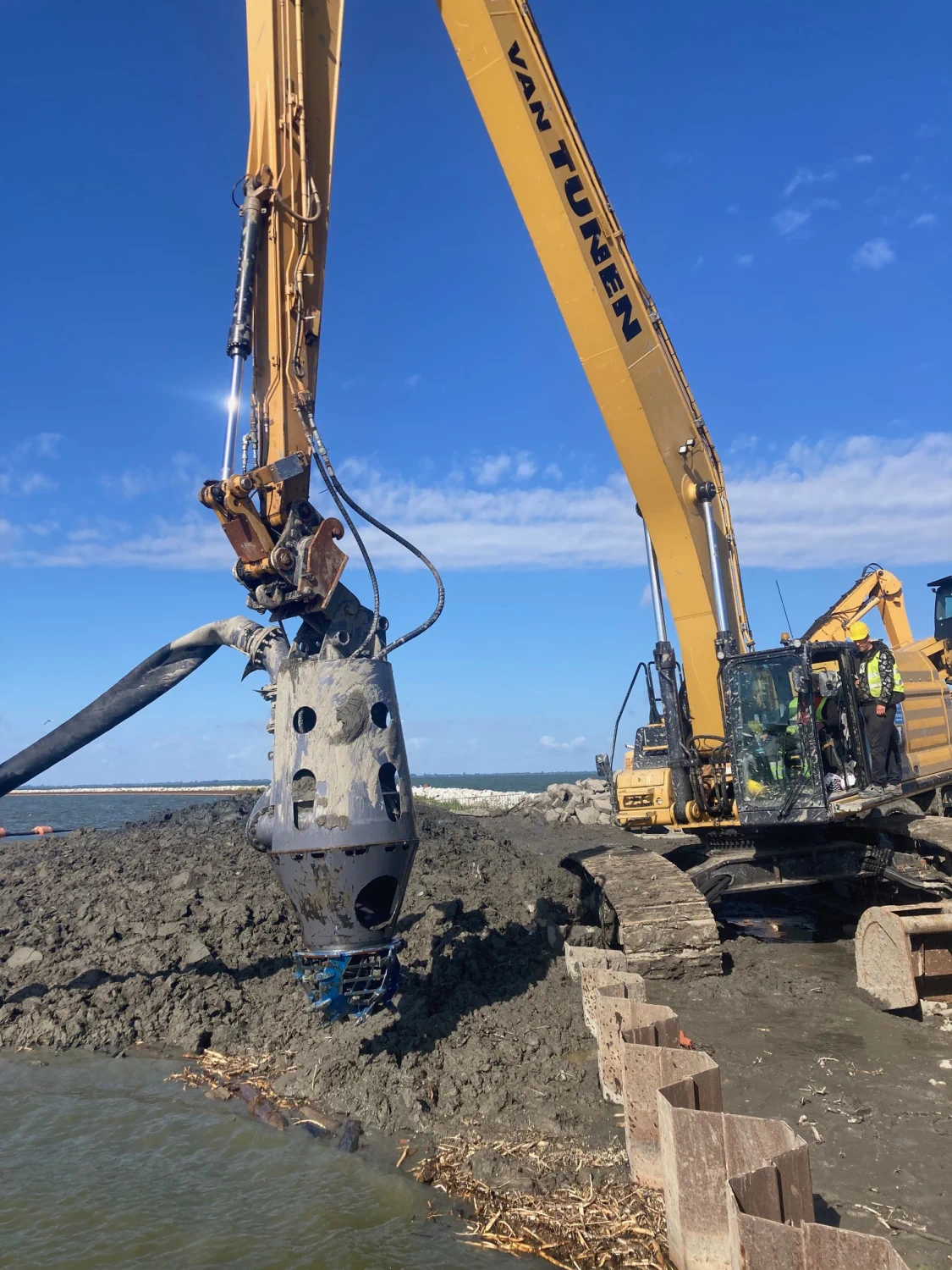
Recently, we have been increasingly using SDP silting pumps for sand and gravel extraction. These pumps are mounted as attachments to crawler excavators positioned on pontoon rigs or on the shores of reservoirs. Pumping aggregates using submersible pumps allows for the pumping of dense slurries, thus significantly reducing costs.
To extract aggregates from very great depths, we use dredgers that also incorporate SDP pumps as working elements. The pumps are lowered onto a rope to the bottom of the reservoir. This technology allows for excavation depths of up to 50 meters.
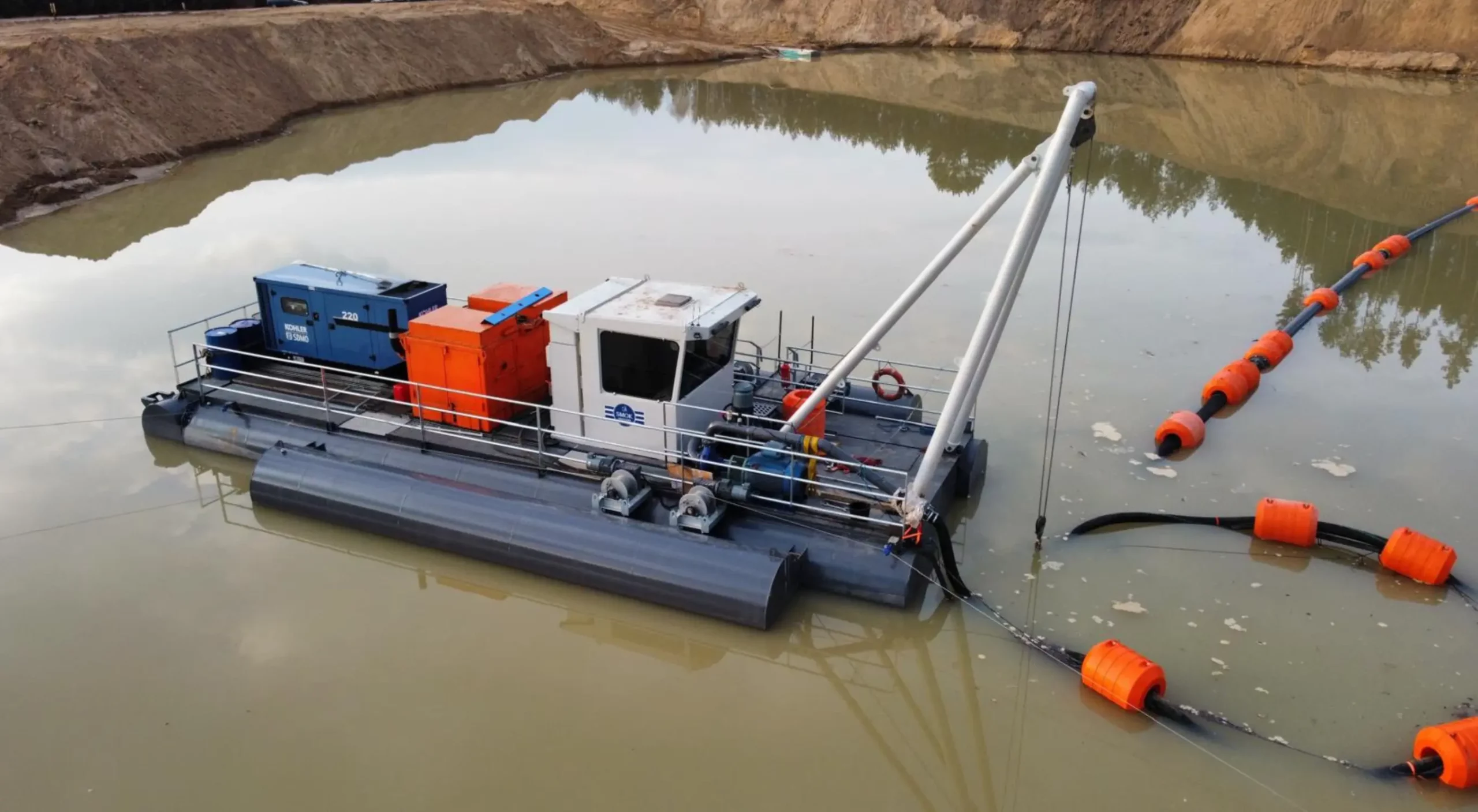
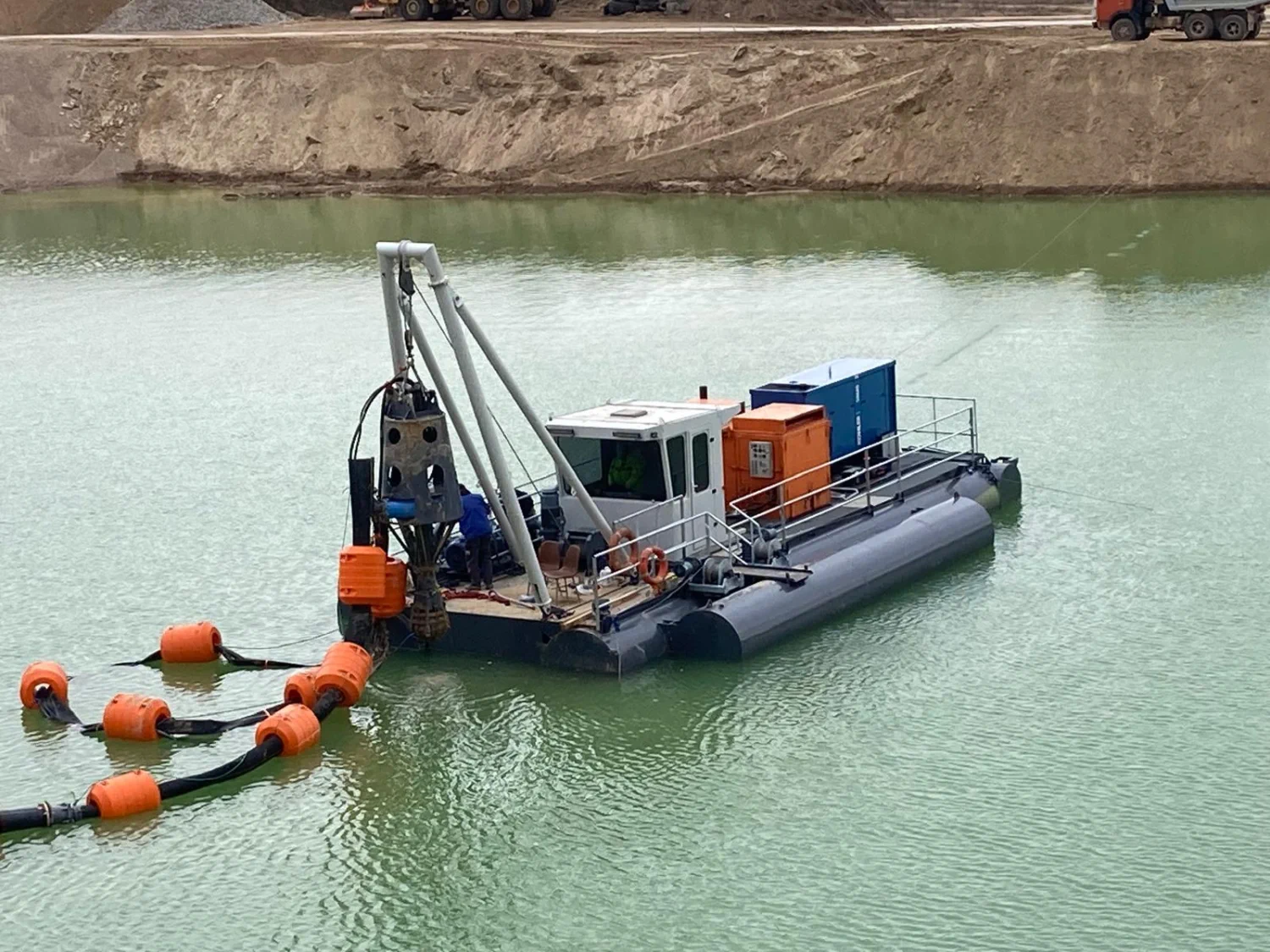
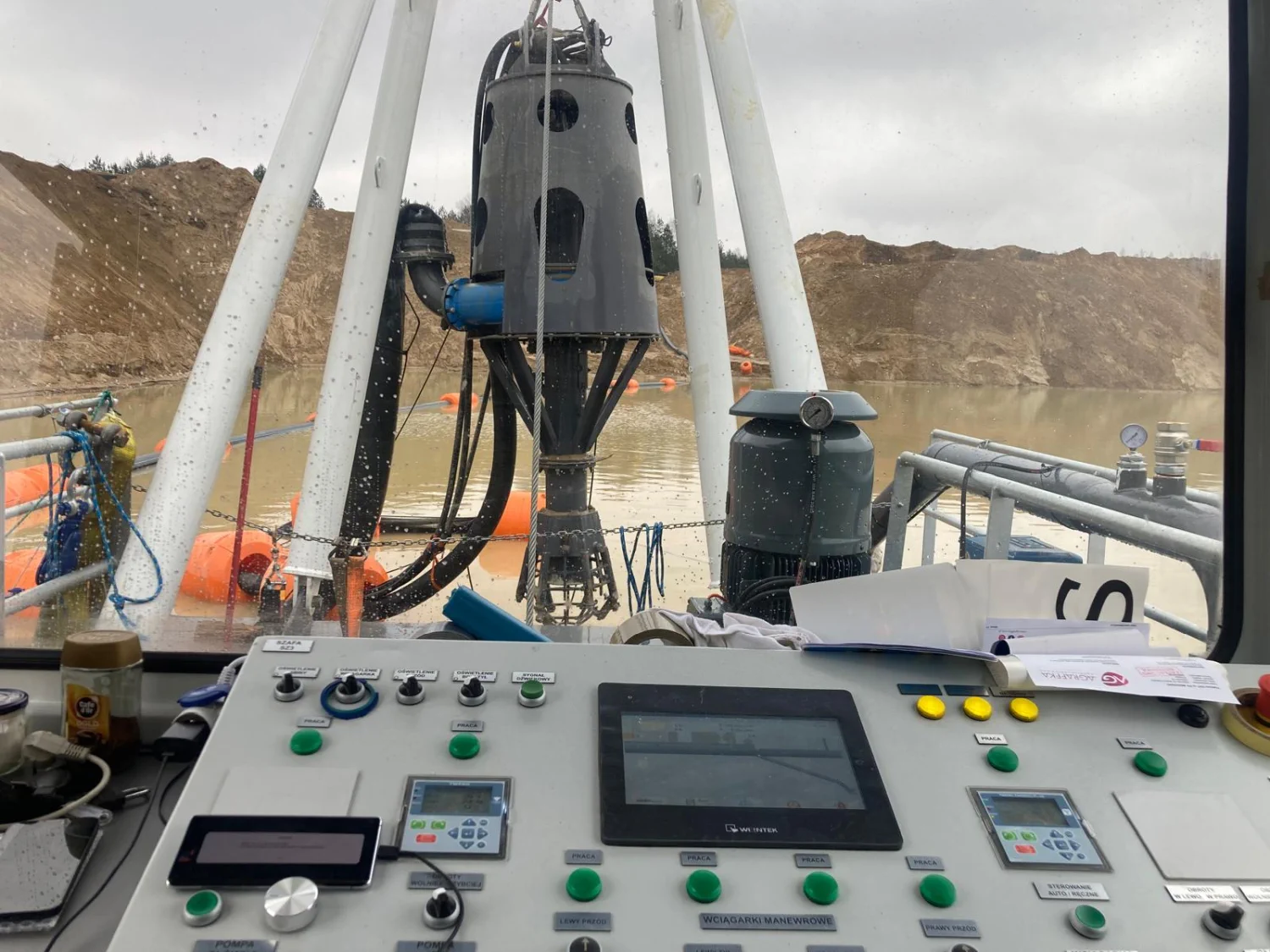
We offer the option of concluding an equipment rental agreement with operator support, with the option to sell it. We consider this type of service to be a potential means of selling the equipment.
2. Deepening and desludging of rivers and other water bodies
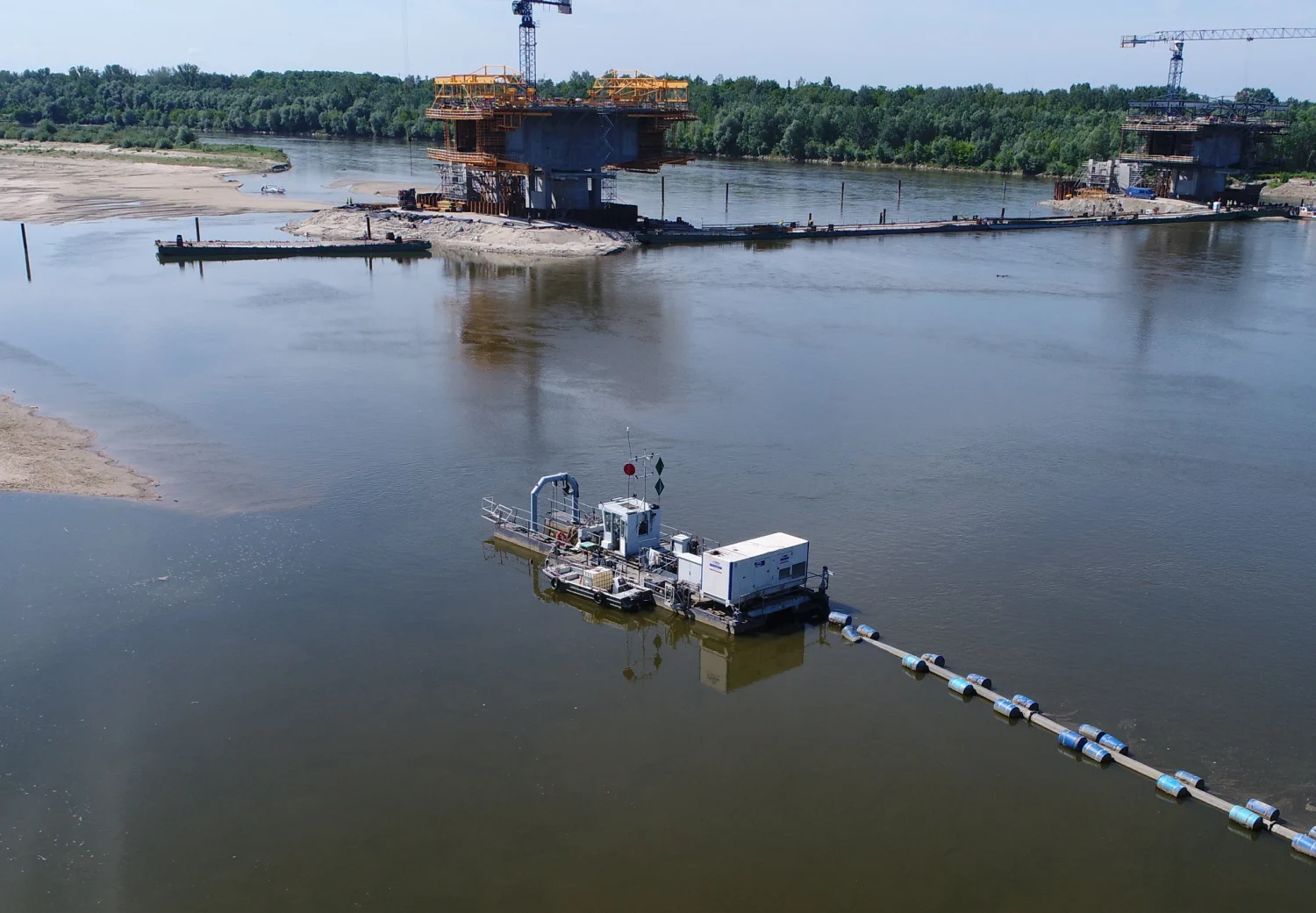
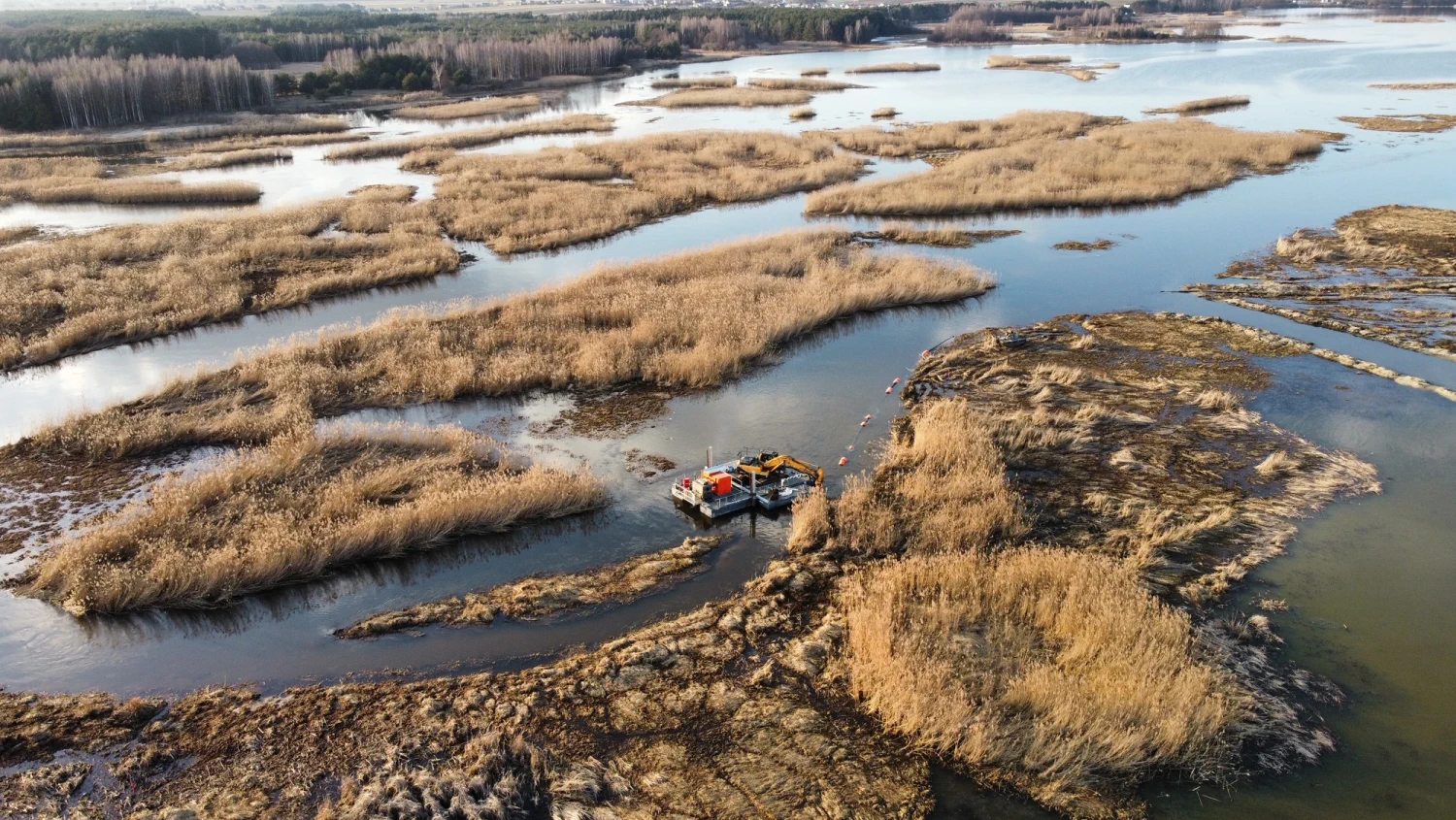
These include projects on rivers, lakes, ports, and at sea.
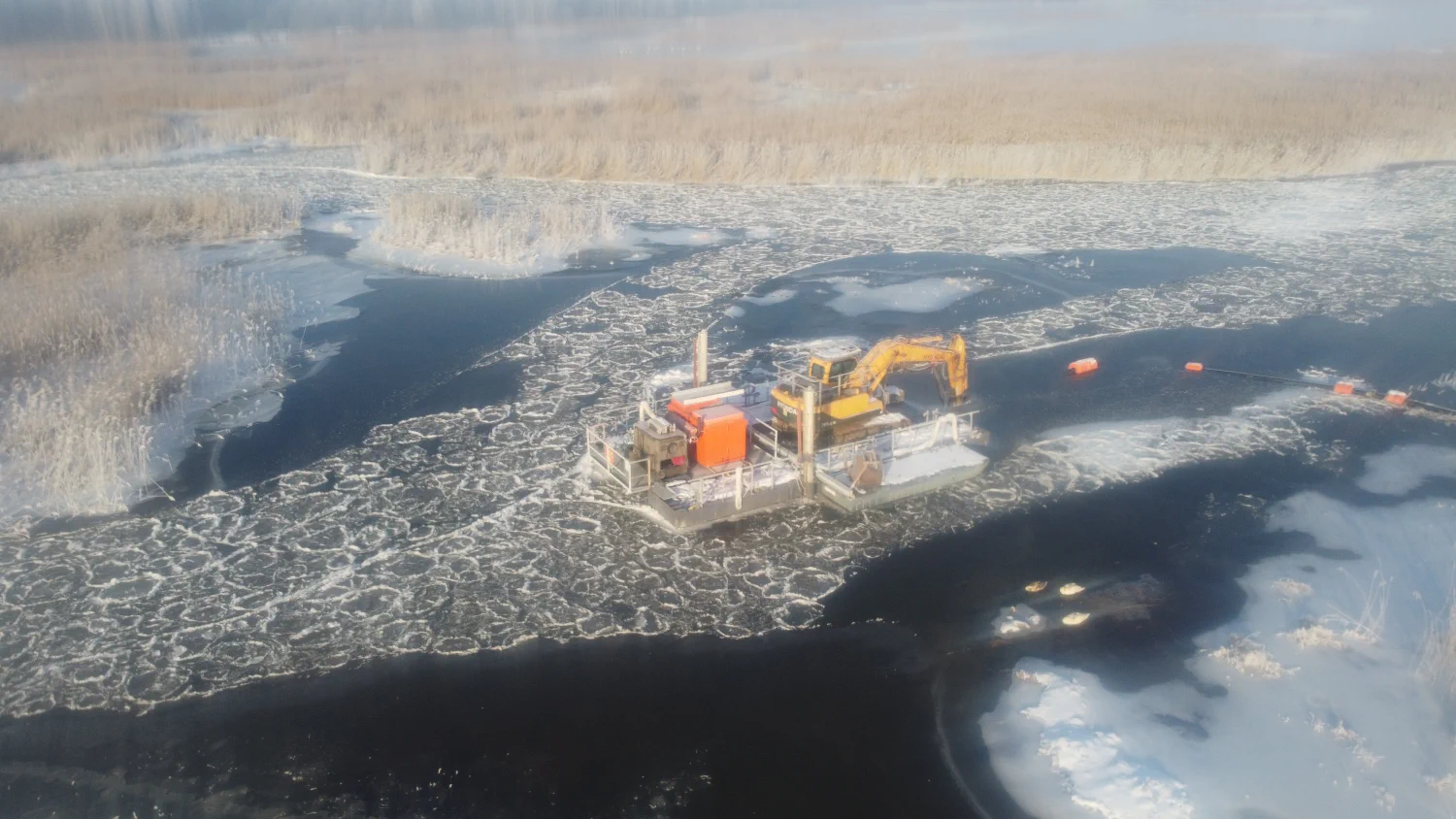
We have completed a wide range of complex, demanding projects, including: on the Vistula River, work related to the construction of the motorway bridge in Wilanów along the A2 motorway, and work on the Bay of Gdańsk during the construction of the Vistula Spit canal.
3. Dredging service with chemical treatment of sediments for dewatering
It’s important to remember that deepening a reservoir and desilting it are not necessarily the same thing. In practice, it’s common for a contracting authority to announce a tender for reservoir desilting and specify the depth of the bottom after the work is completed as the only verification parameter. In practice, when the service involves removing a layer of silt lying on a sandy substrate, the service provider ends up pumping not only the silt but also the underlying sand from the bottom to prepared silting fields on the shore. The sand separates from the water in the silting fields, where it remains. However, the silt, due to its slow separation from the water, returns almost entirely to the reservoir. This results in the reservoir being deeper but equally heavily silted after the work is completed.
This is a special type of reservoir desilting service. It applies to situations where the sediment being extracted is very fine-grained or is a biological sediment that requires a very long time to sediment (separate from the water).
In some cases, when there is no space to organize a very large silting field, the only method of dewatering the sediments is their physicochemical processing by dosing the flowing suspension with polyelectrolytes and then dewatering the sediments in geotubes or presses.
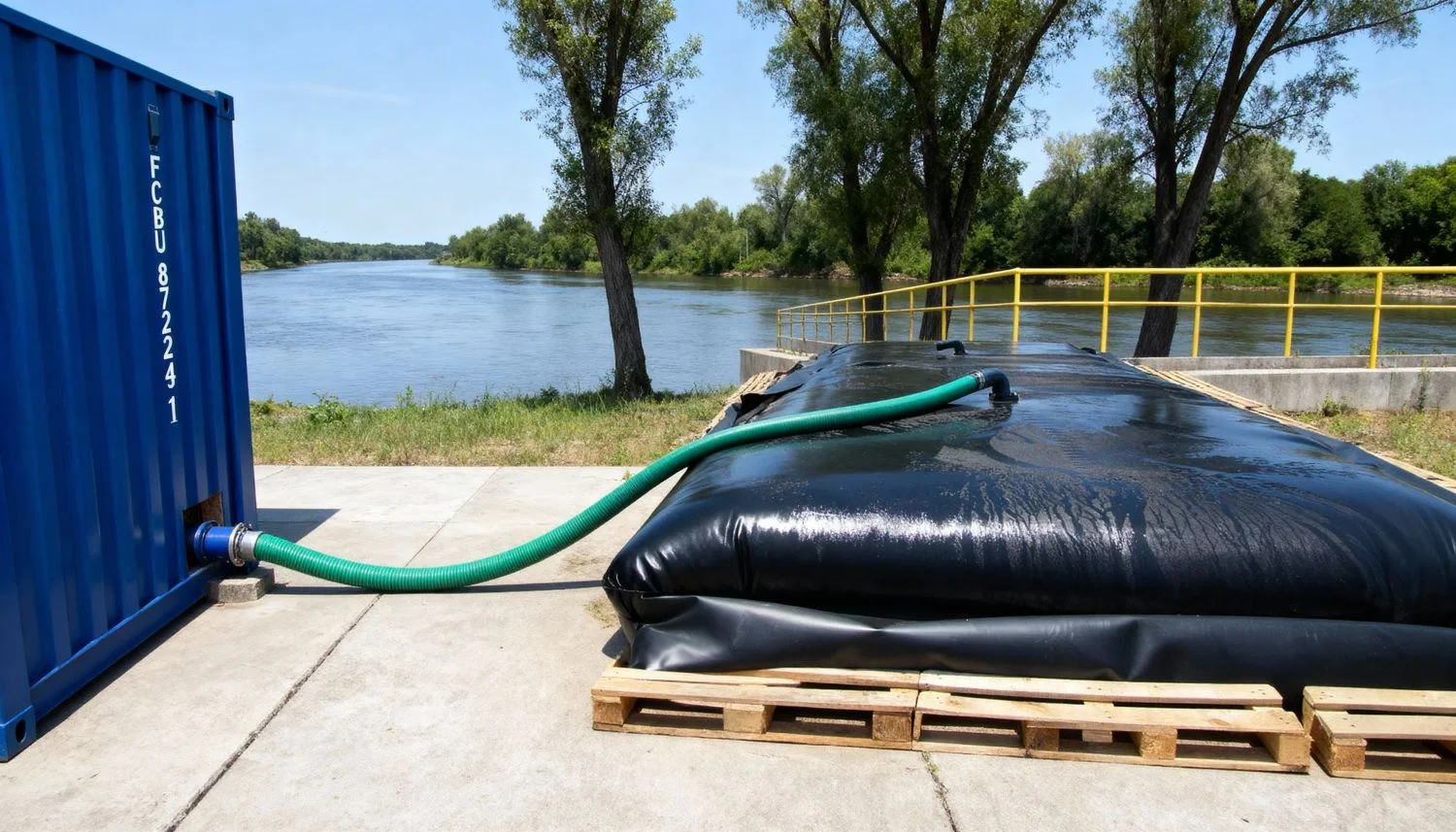
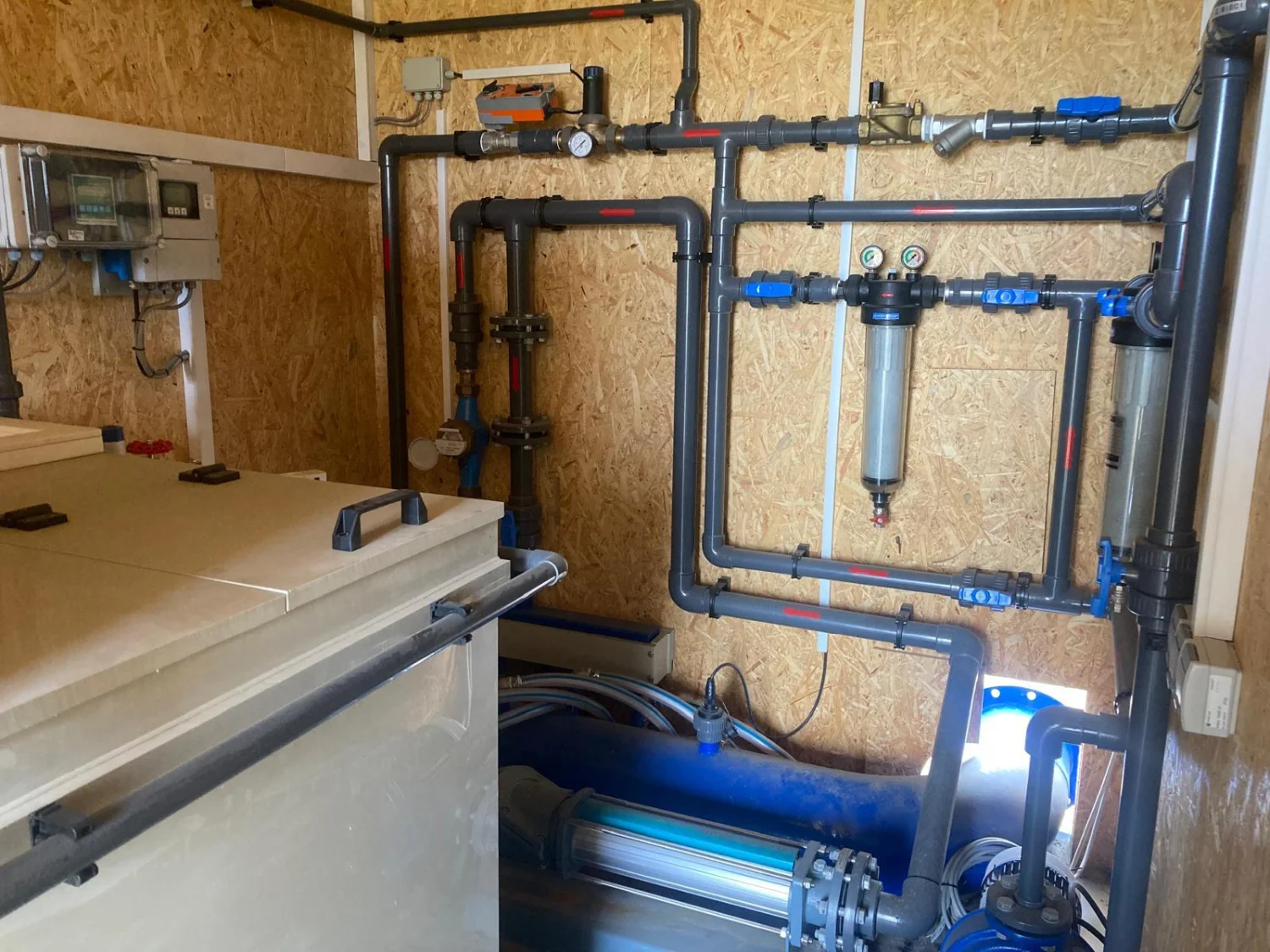
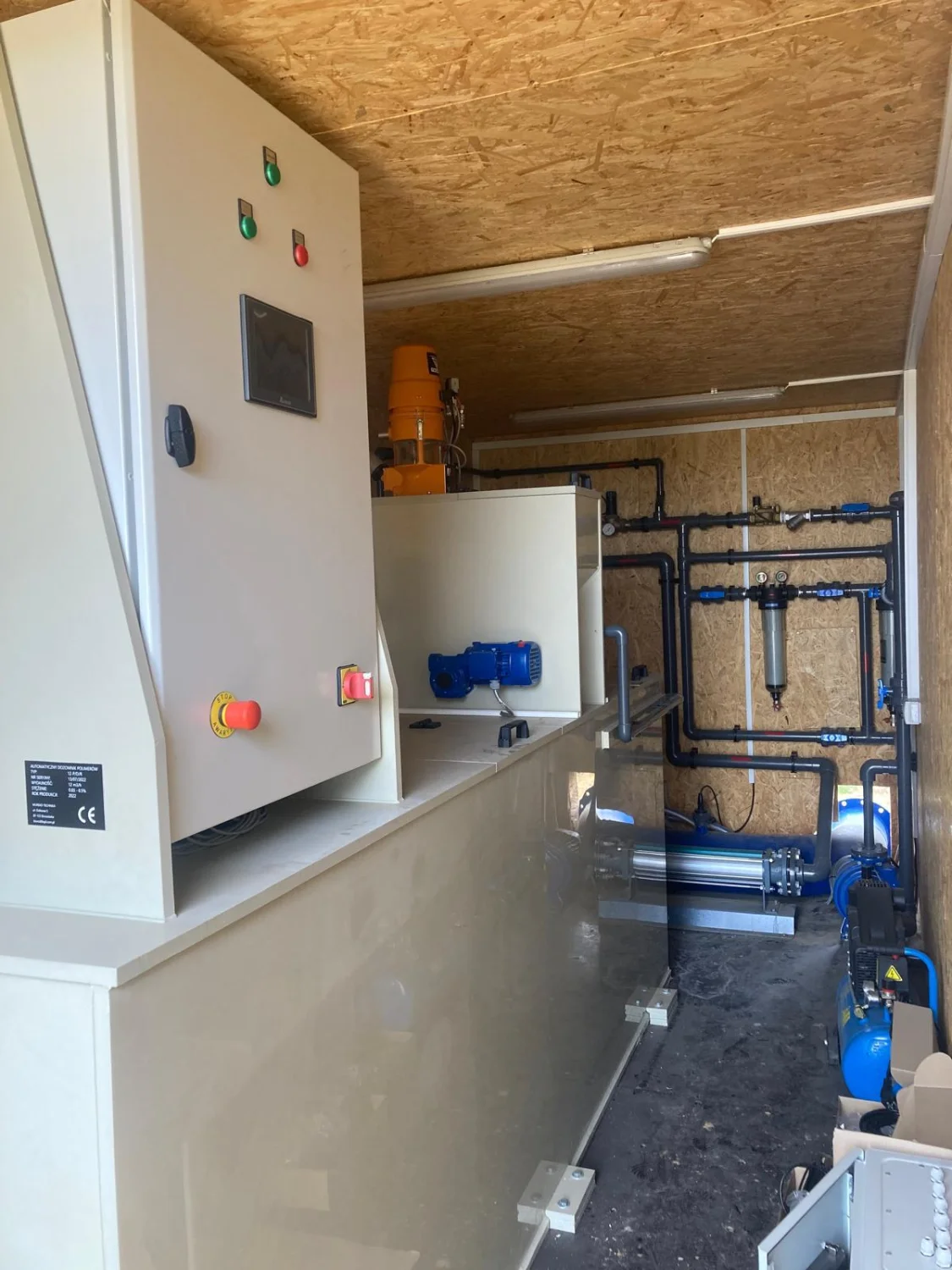
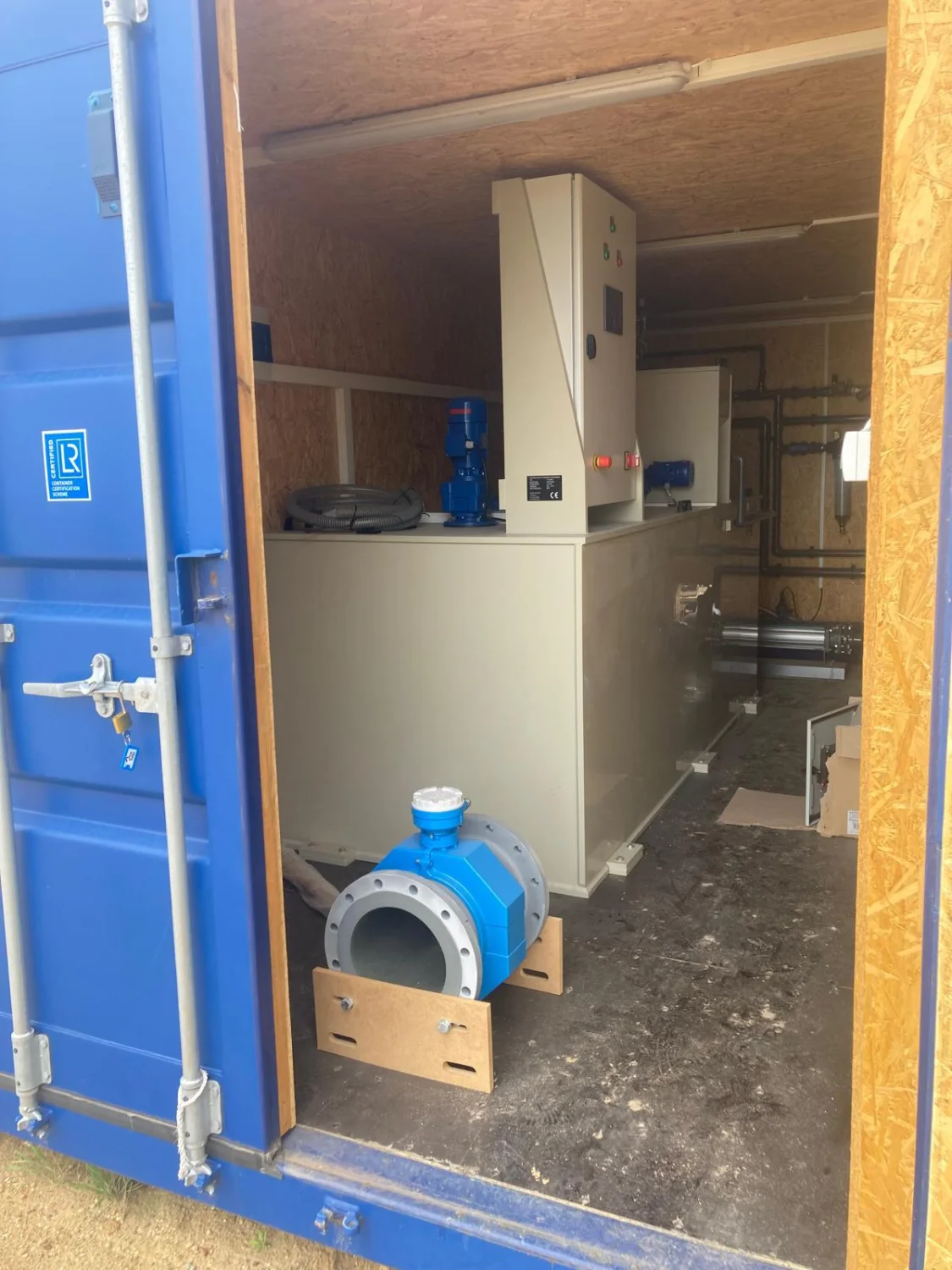
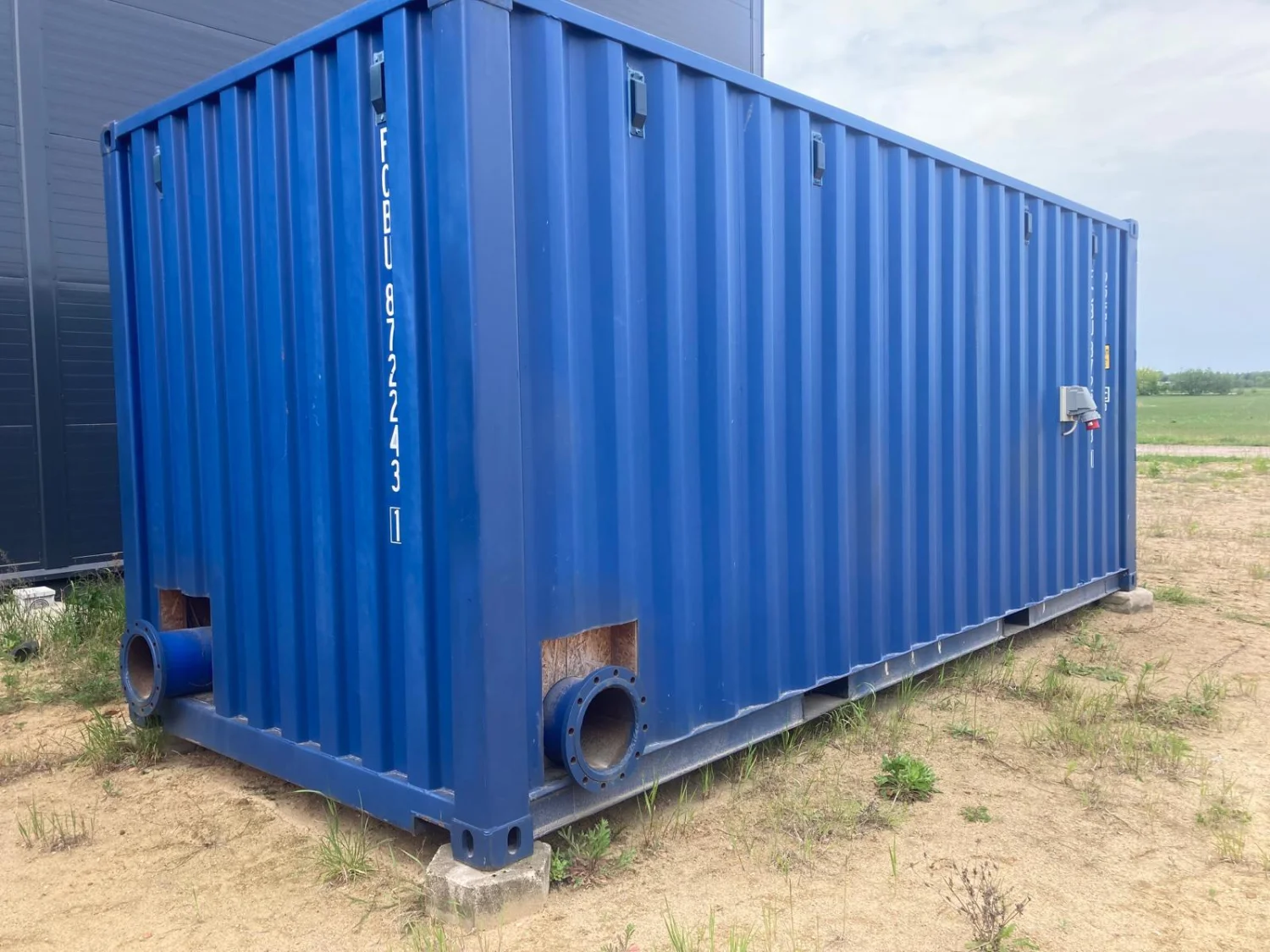
To provide this type of service, we have a modern, highly capable polyelectrolyte dispenser that allows for precise dosing of the substance. This allows us to perform large-scale work efficiently and safely.
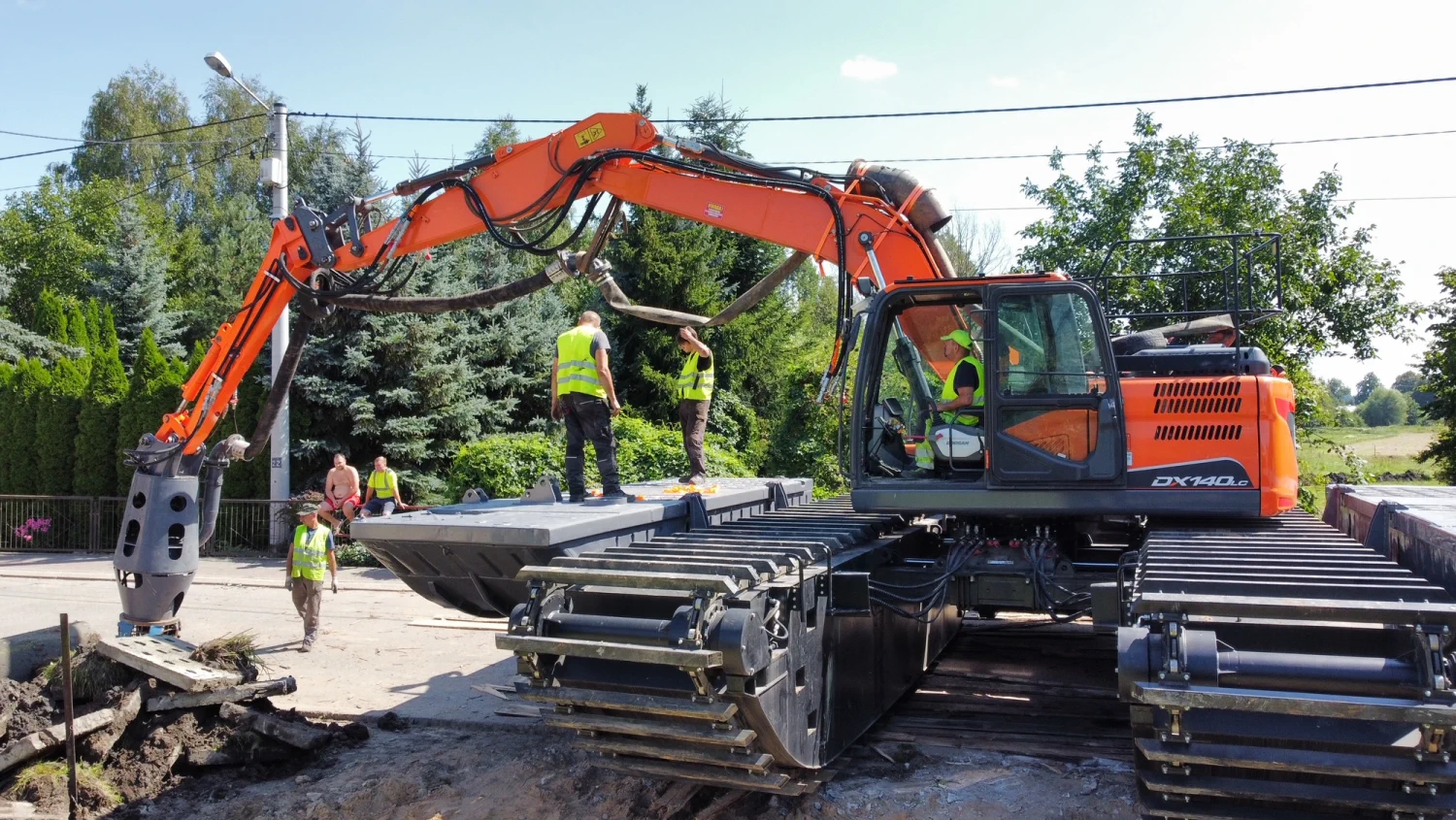
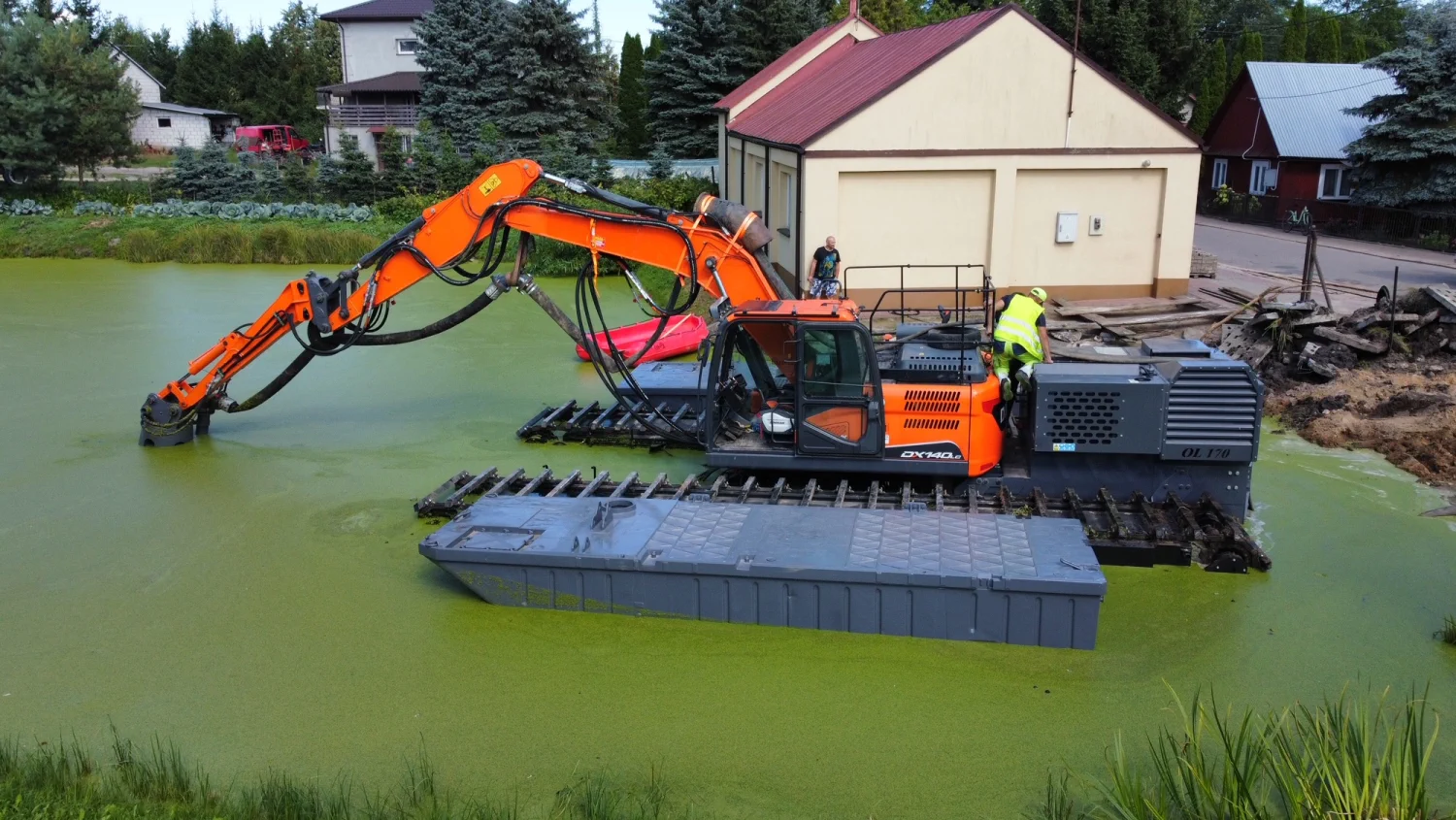
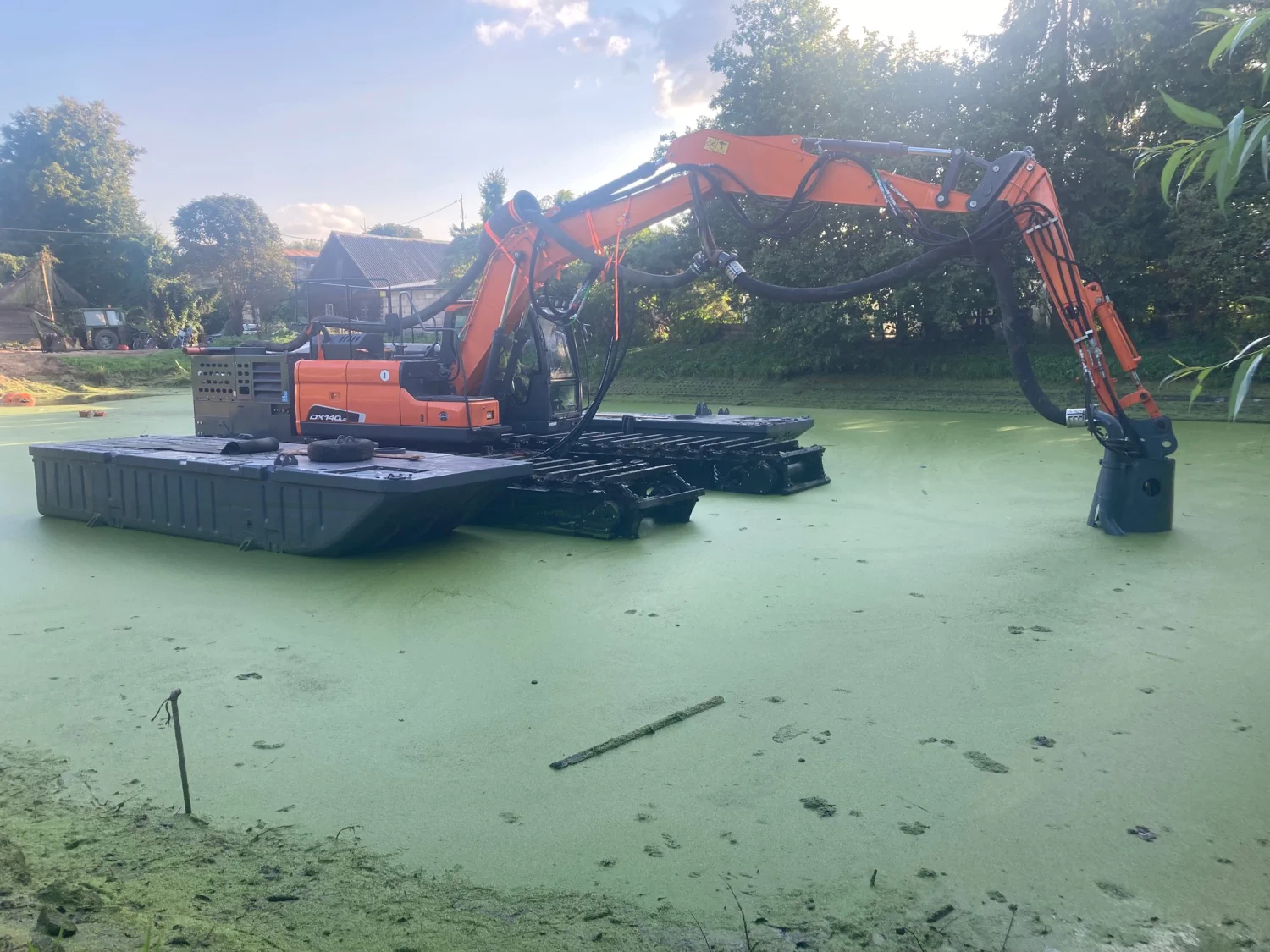
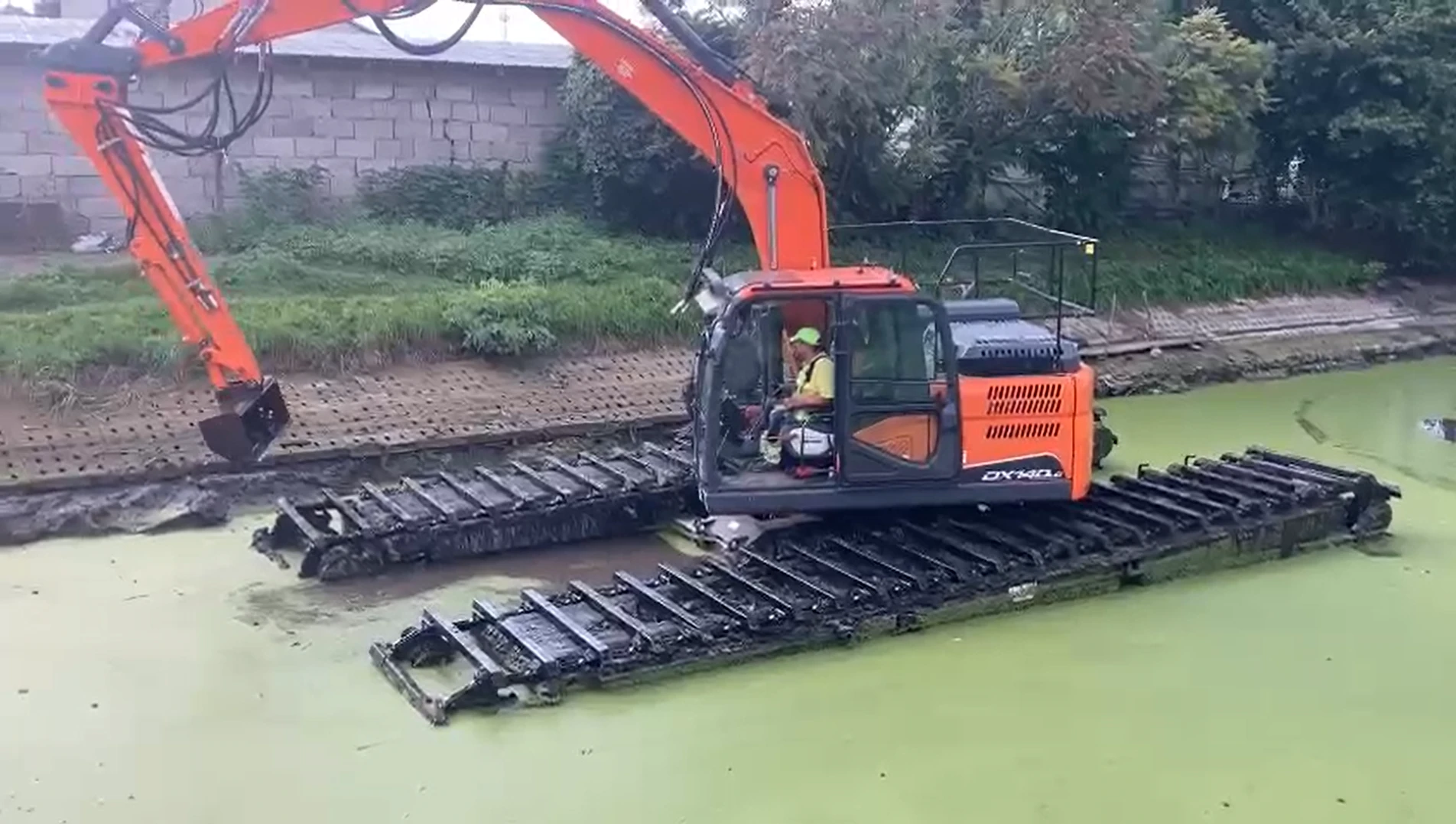
4. Dredging services with a wading excavator
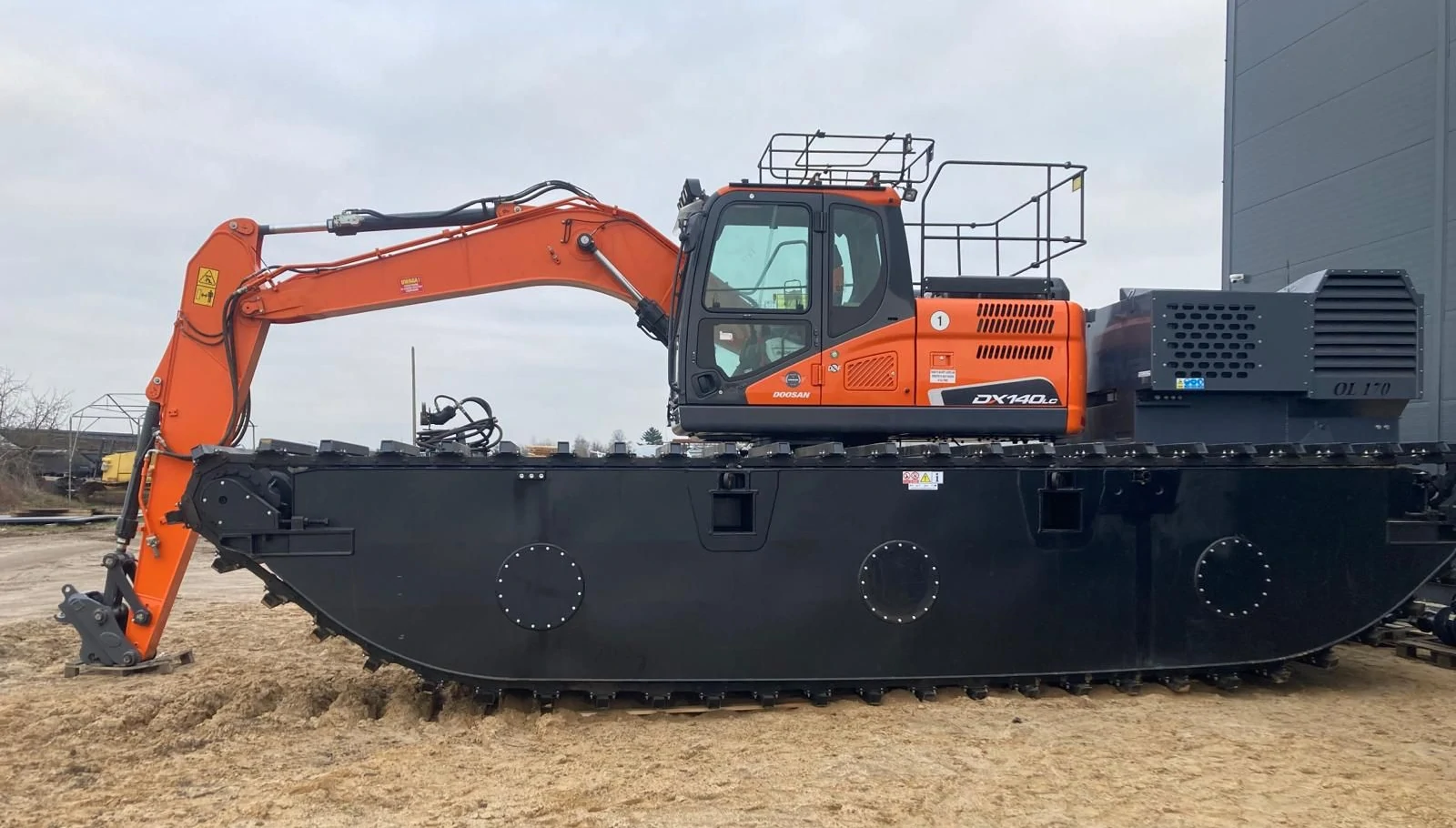
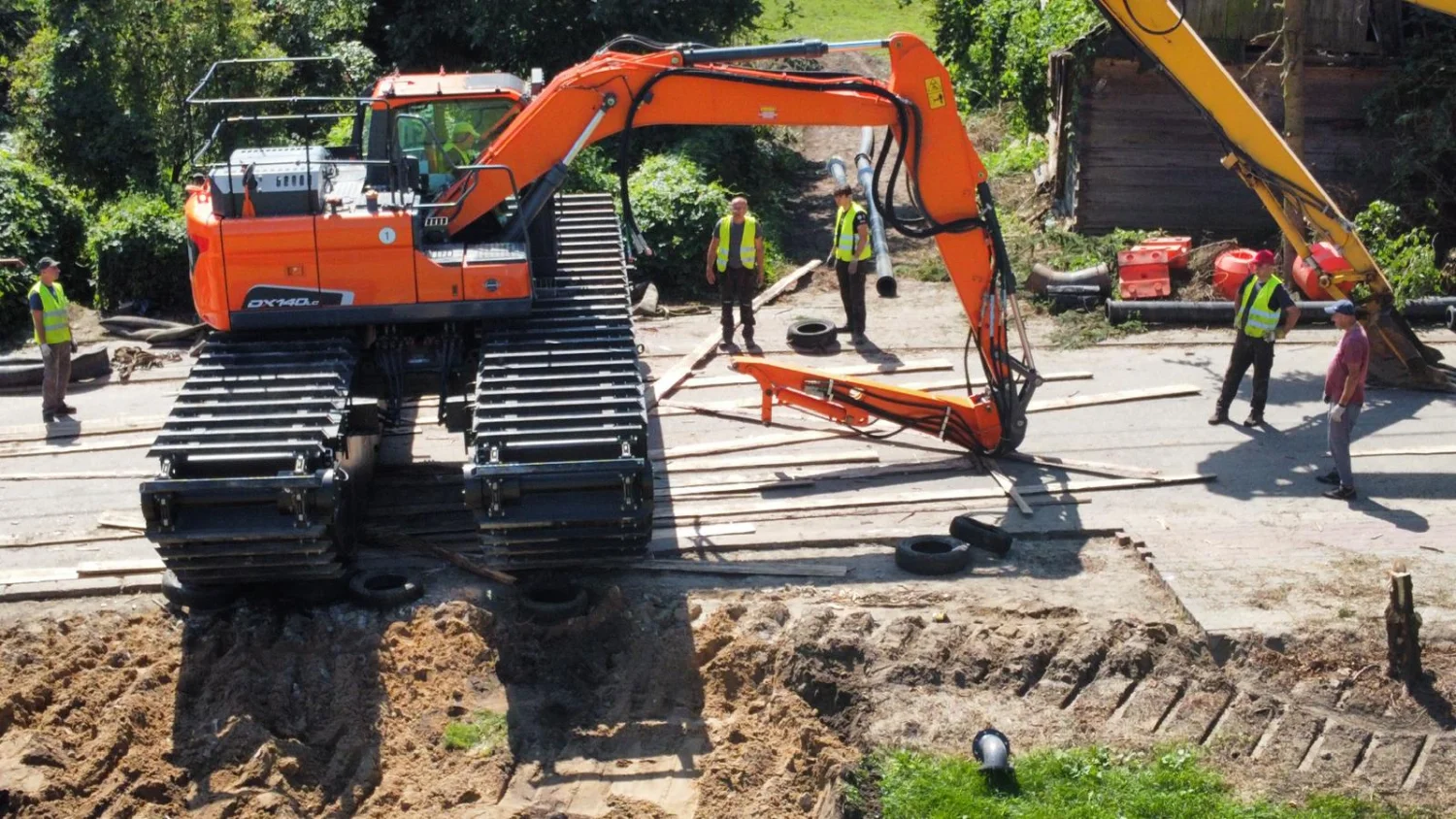
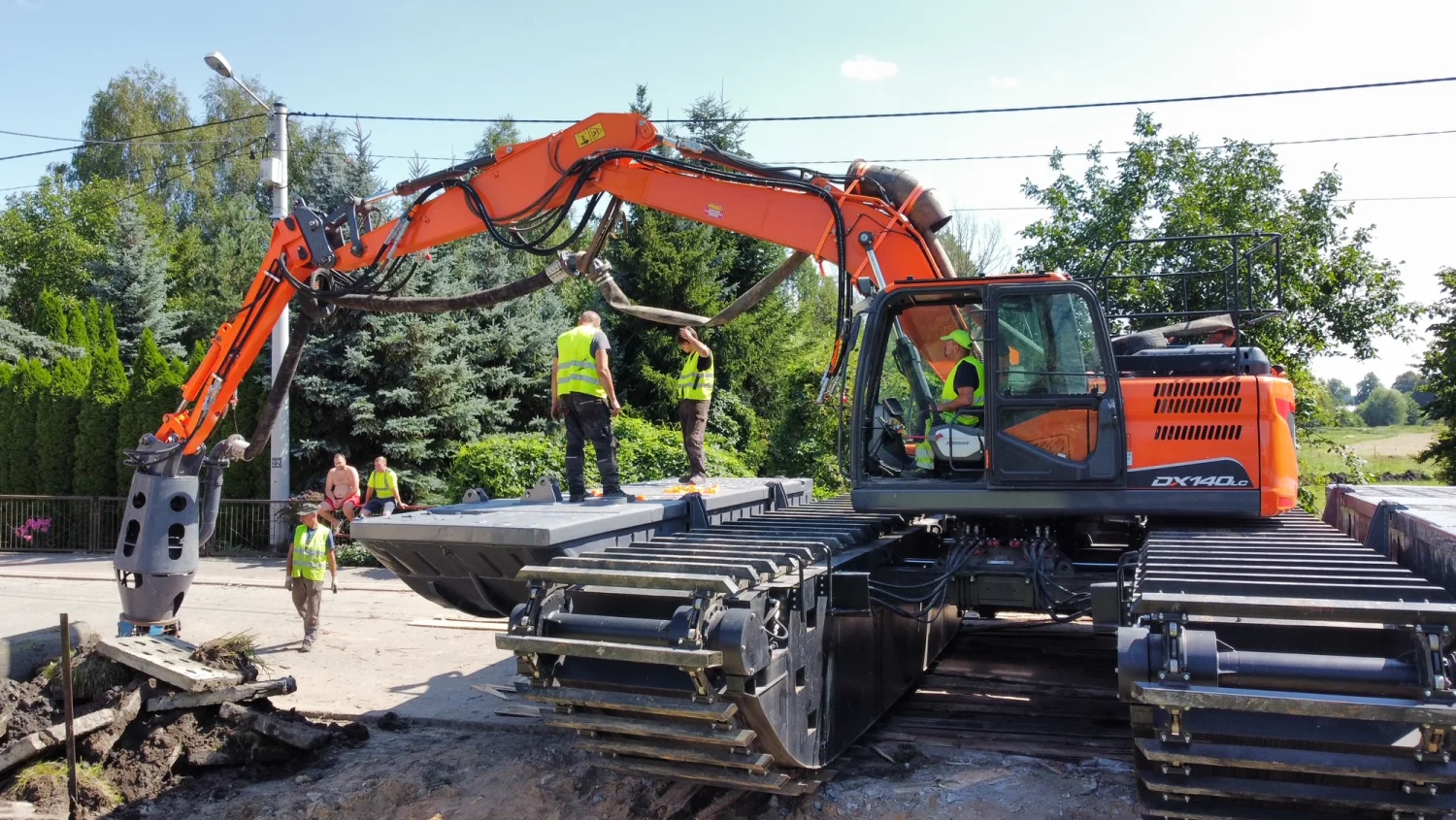
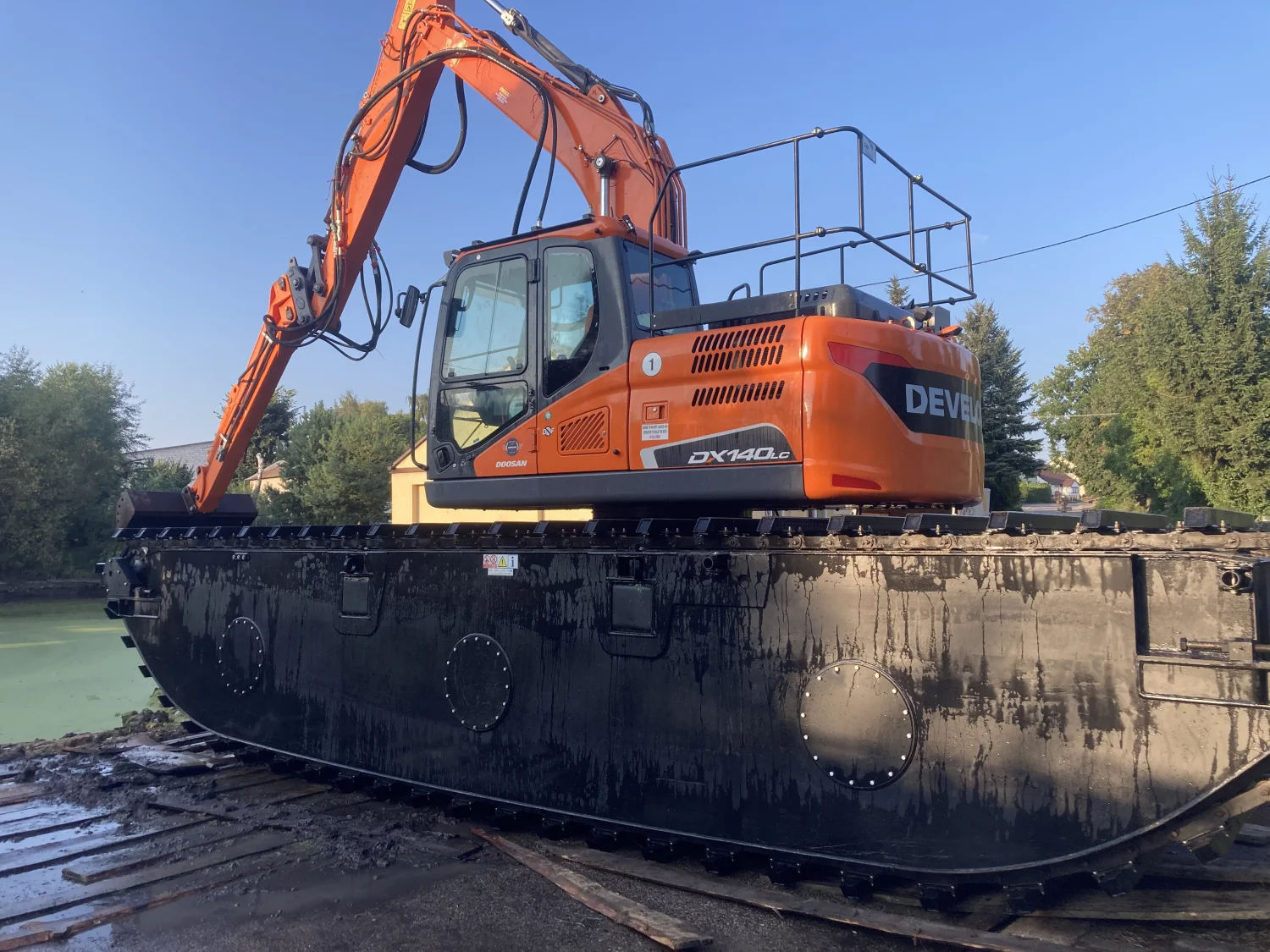
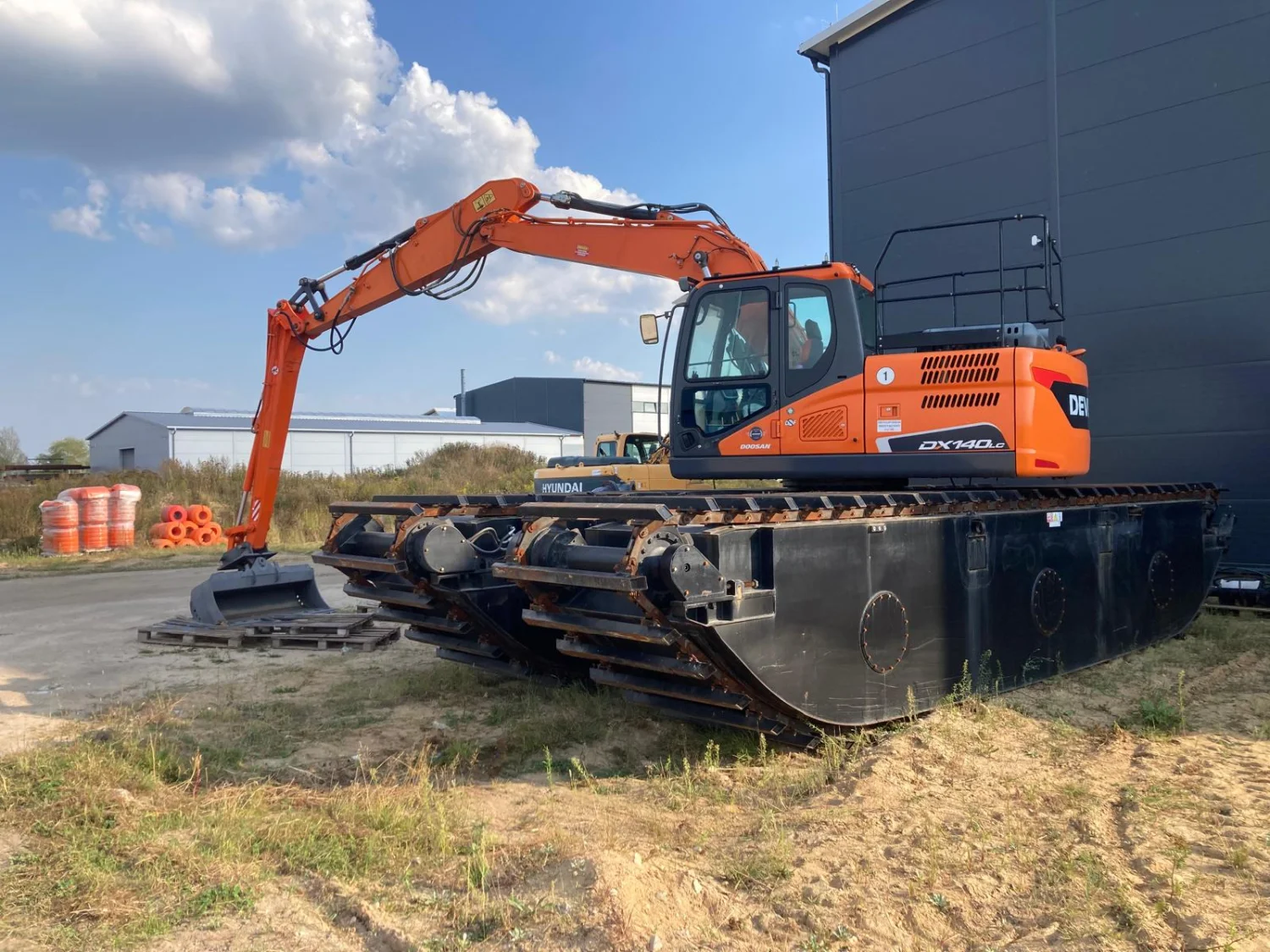
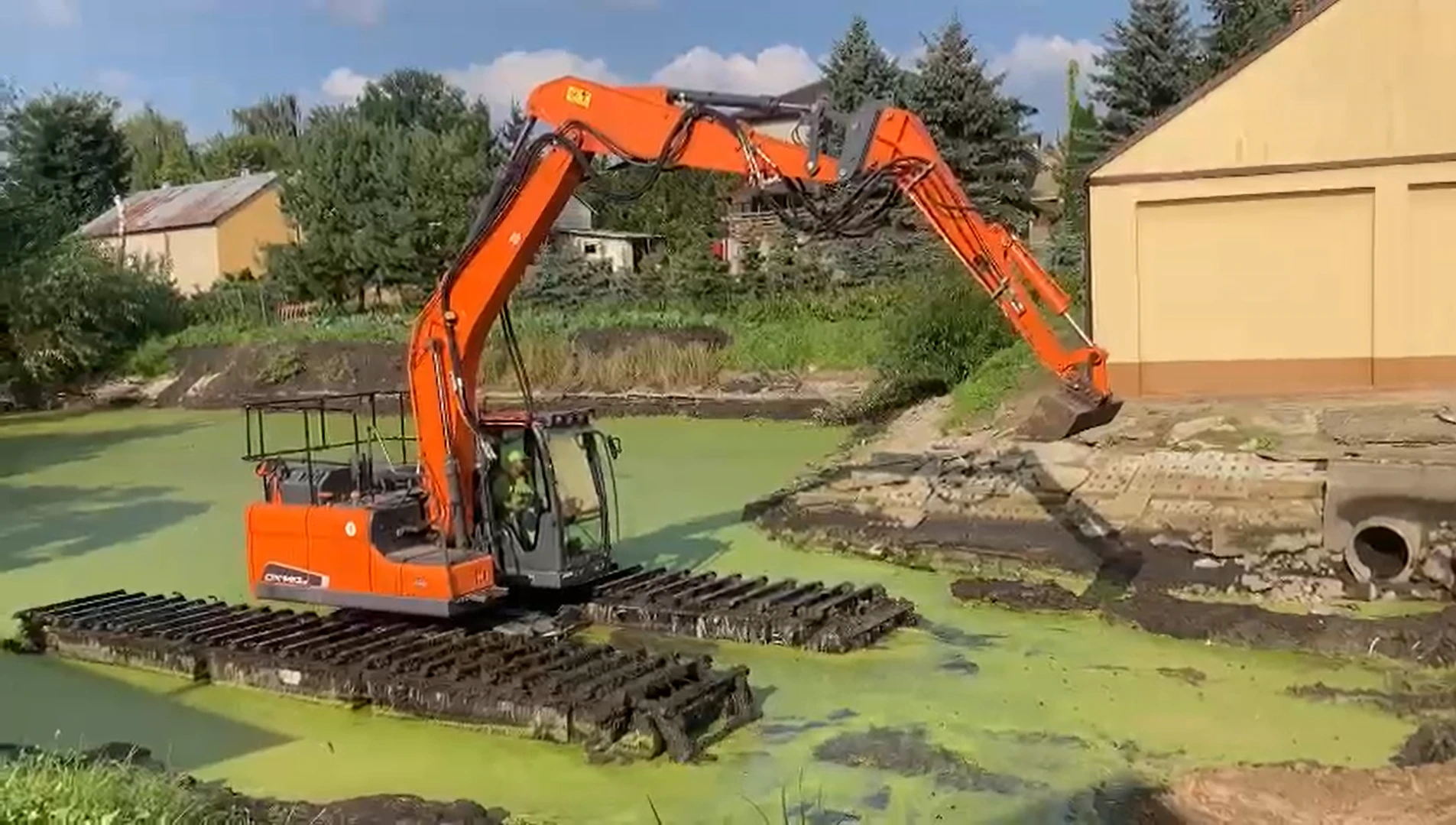
A wading excavator is an excavator with a special crawler undercarriage. This undercarriage has a very high potential displacement, at least equal to the excavator’s weight. The deeper the excavator goes into the water, the less pressure the crawler exerts on the bottom of the tank. At a certain point, the pressure is close to zero. This allows it to enter shallow reservoirs with very soft, non-load-bearing bottoms.
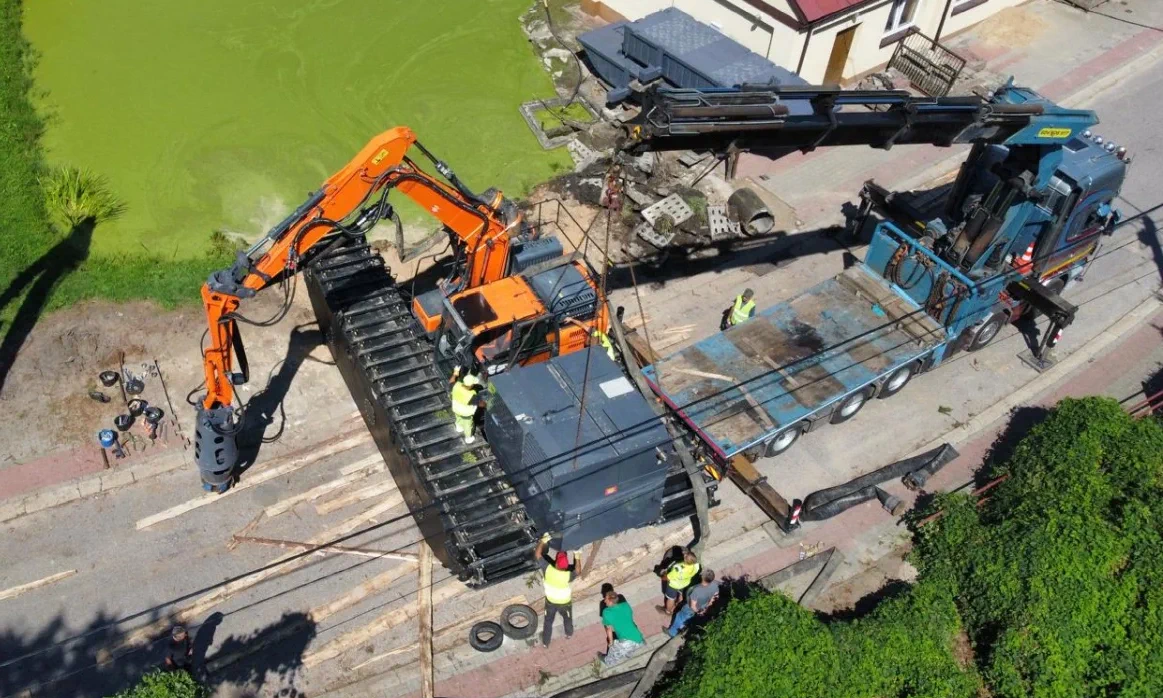
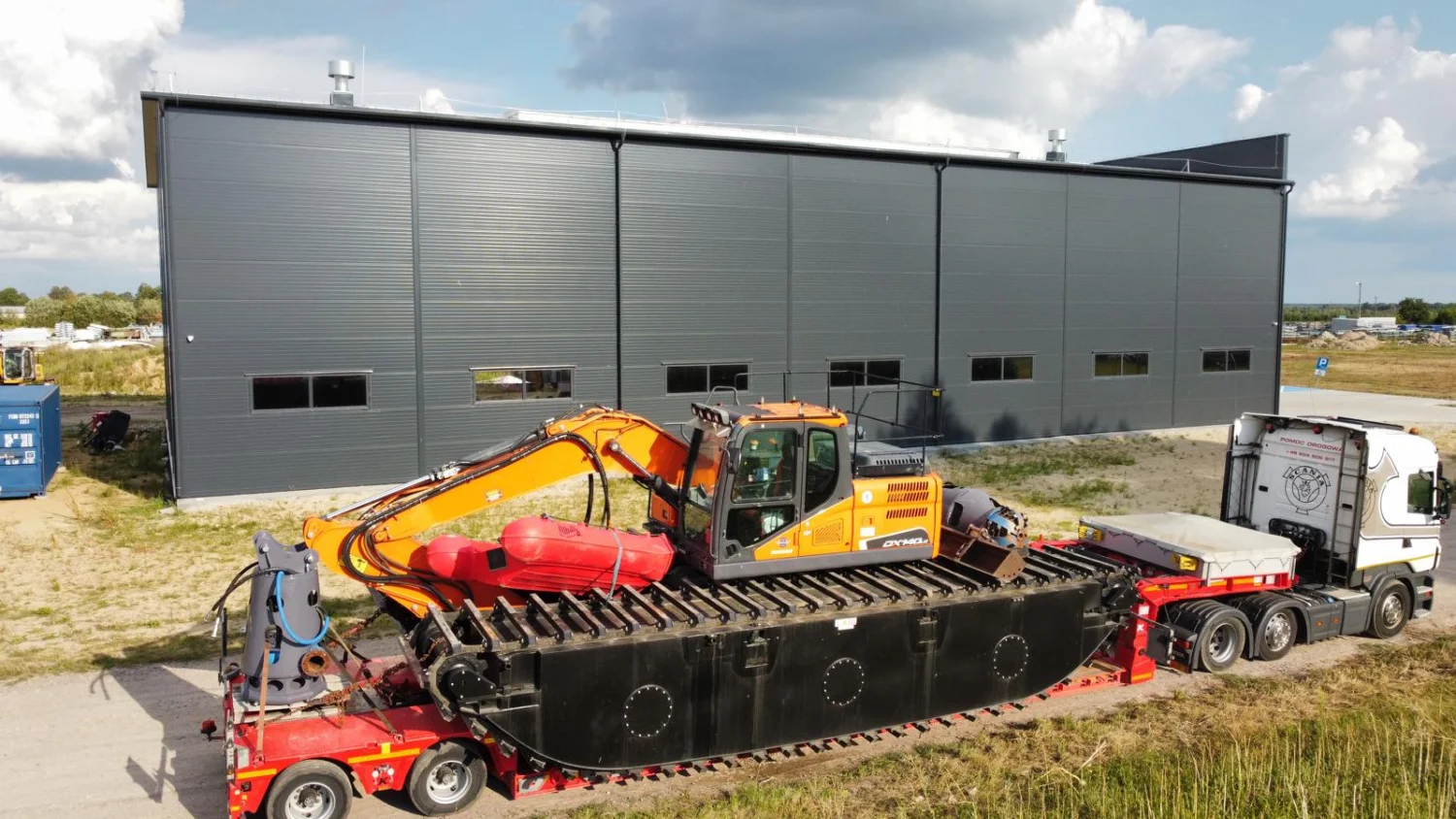
Our wading excavator can be used with silting pumps with a capacity of up to 1200 m³/h, and its dimensions allow it to be transported without disassembly. There is no need to separate the excavator body from the undercarriage. This is the only solution on the market that offers this capability.
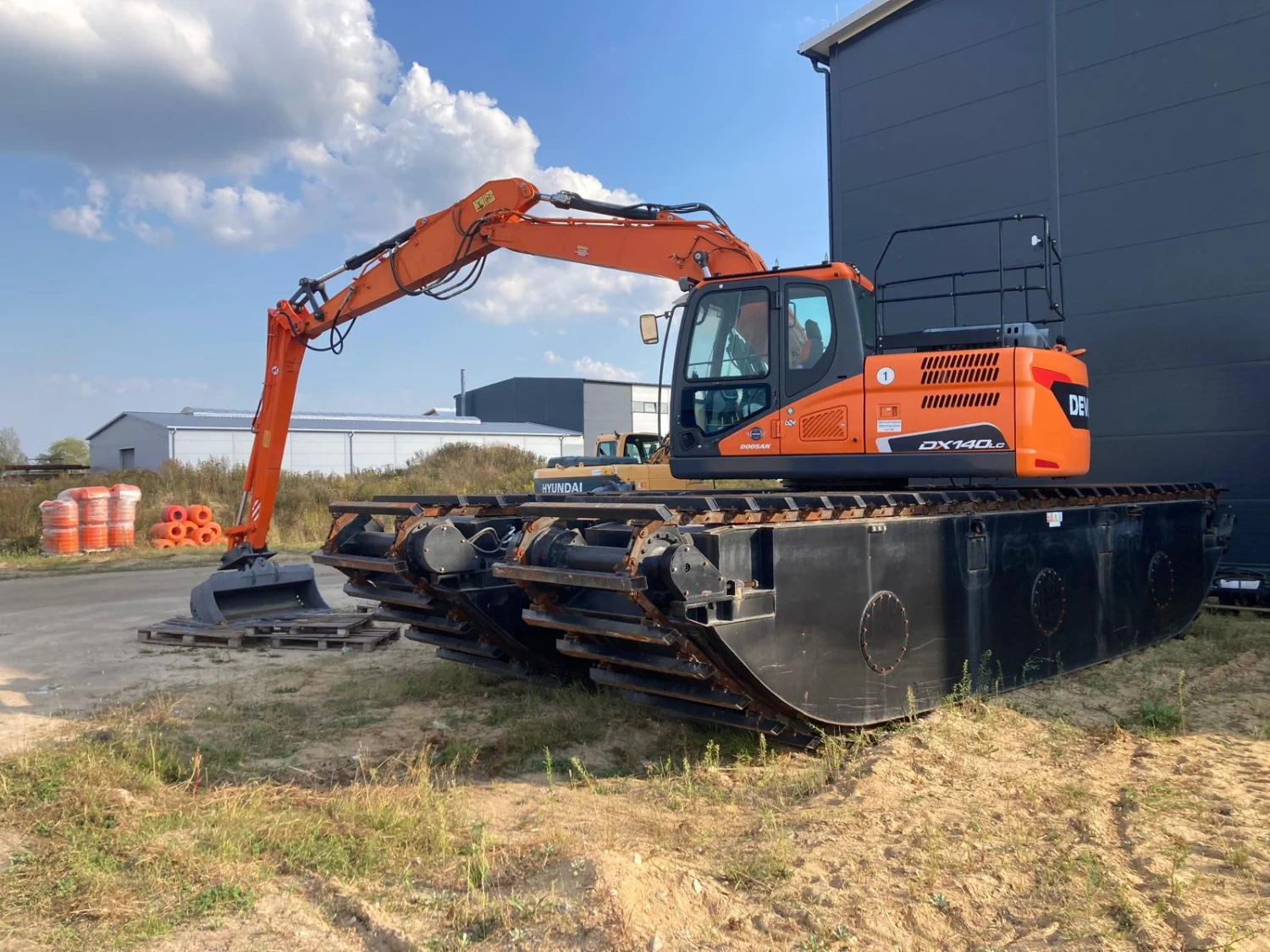
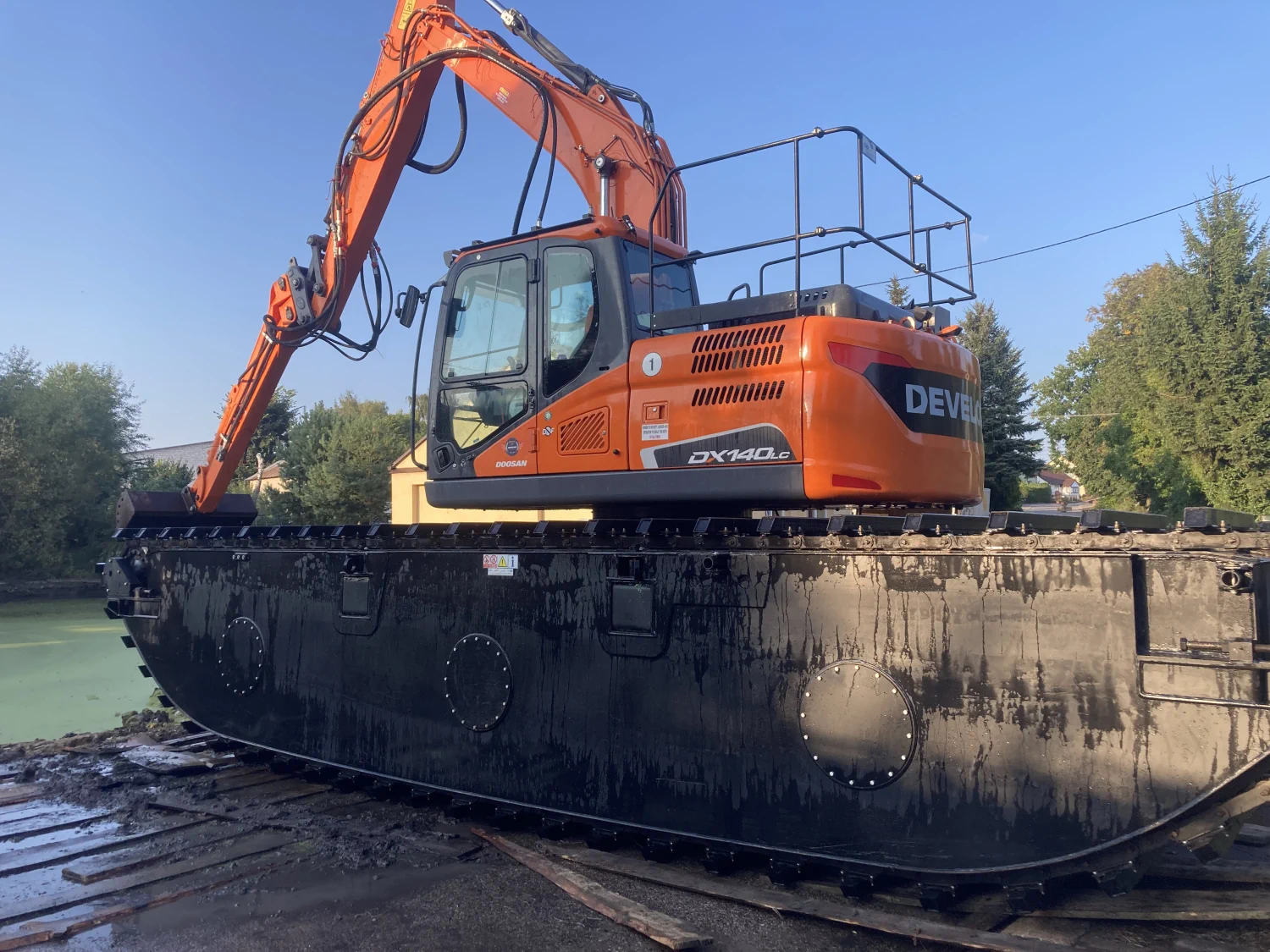
The wading excavator will consist of three main components:
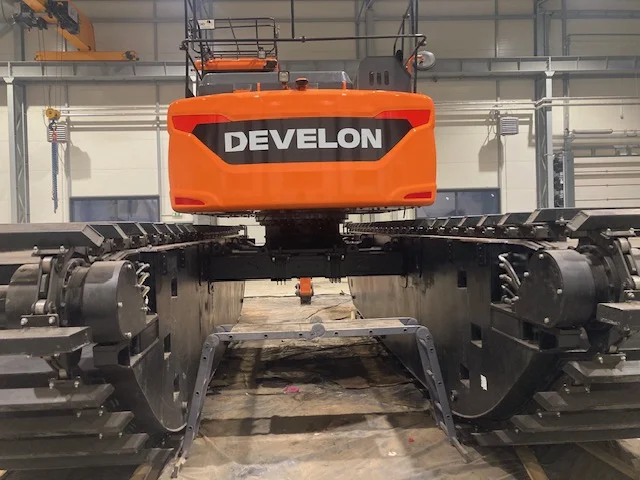
- The crawler undercarriage – a displacement undercarriage consisting of a left and right track. Both tracks are connected by a linkage with a telescopic mechanism, which allows the track width to be widened for operation and narrowed for transport. The excavator tower is mounted to the linkage.
- The excavator tower is a 150-class excavator. We prefer the Doosan DX140 model.
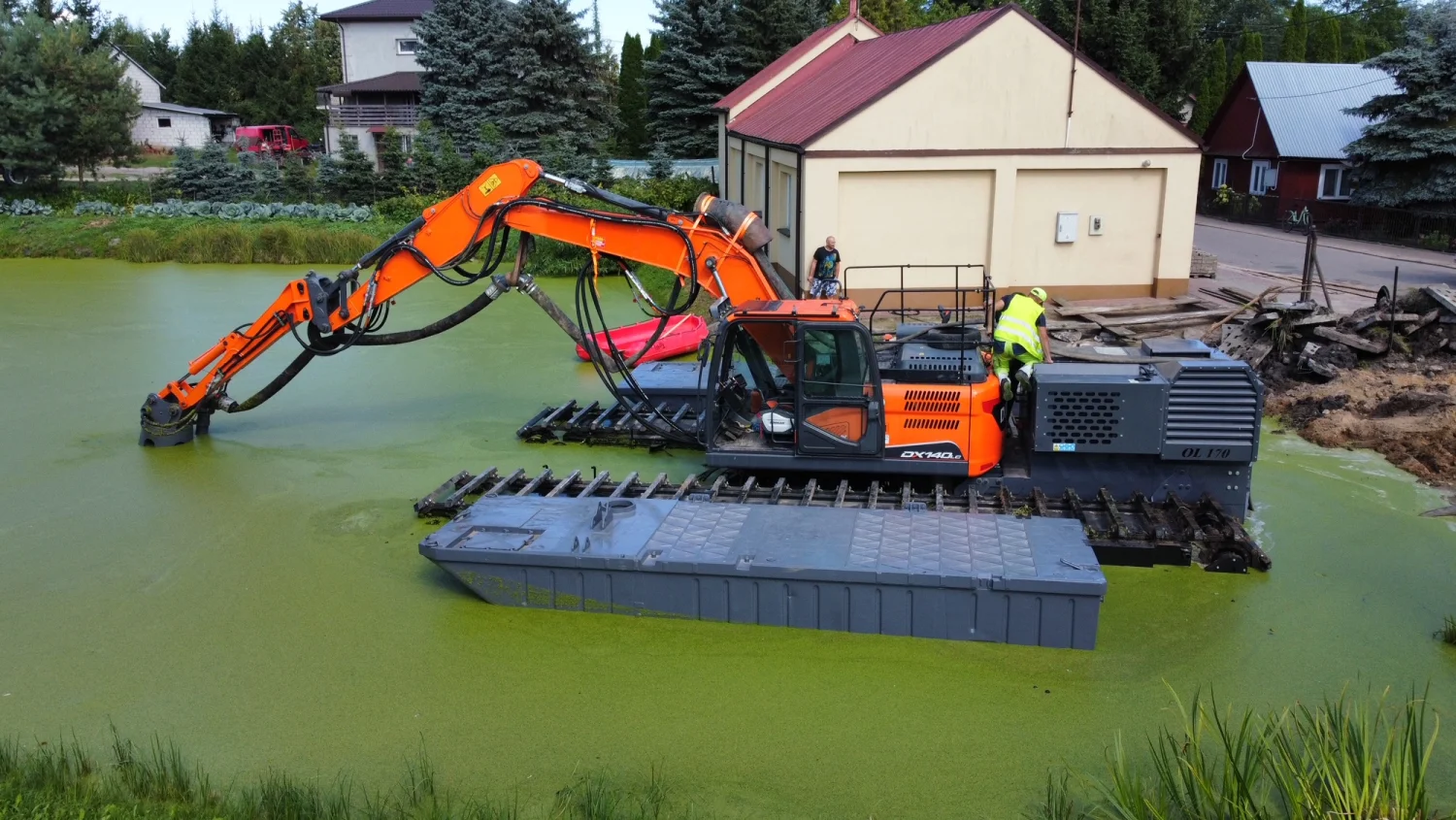
- The hydraulic power unit. The unit is equipped with a diesel engine with an output of over 200 kW and a hydraulic system capable of driving SDP150, SDP200, and SDP350 silage pumps.
The unit’s housing is waterproof, resembling a pontoon. During operation, the unit is partially submerged in water, which also provides buoyancy and reduces the pressure on the tracks on the bottom.
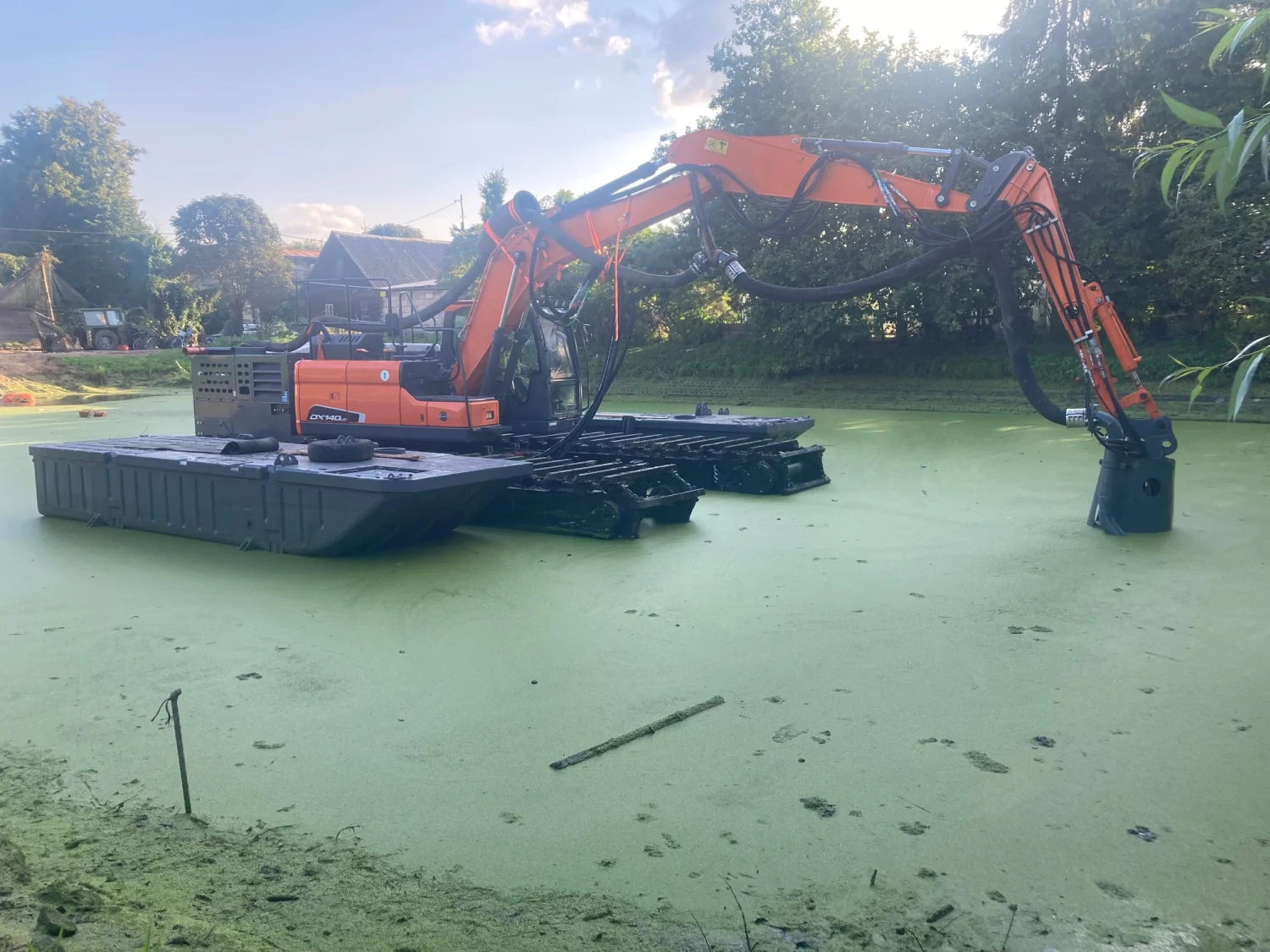
Wading excavator services can be divided into dredging works performed:
Mechanically
A wading excavator can be used for mechanical dredging (using a standard excavator bucket) or for conducting soil tests in wetlands/marshes and very shallow bodies of water. For this type of work, a hydraulic power unit is not required. In this case, the first two components of the wading excavator are used.
The Dredging Method
The primary function of a wading excavator is to perform dredging/reclaiming operations in very shallow, inaccessible bodies of water. The dredging pumps are powered by a hydraulic power unit, the third main component of the wading excavator.
During dredging operations, the excavator performs dredging operations using the reclaiming method, using various pumps depending on the type of work and the diameter of the discharge pipelines used: the SDP150, SDP200, and SDP250 pumps.